Elevating your e-commerce business with high-quality product photography doesn't have to break the bank. With strategic planning and the right techniques, you can achieve stunning visuals while keeping costs manageable. This comprehensive guide will take you through a nuanced exploration of cost-saving strategies, enriched by practical examples and insights.
Understanding Product Photography Costs
Before implementing cost-saving techniques, understanding the expense factors is crucial:
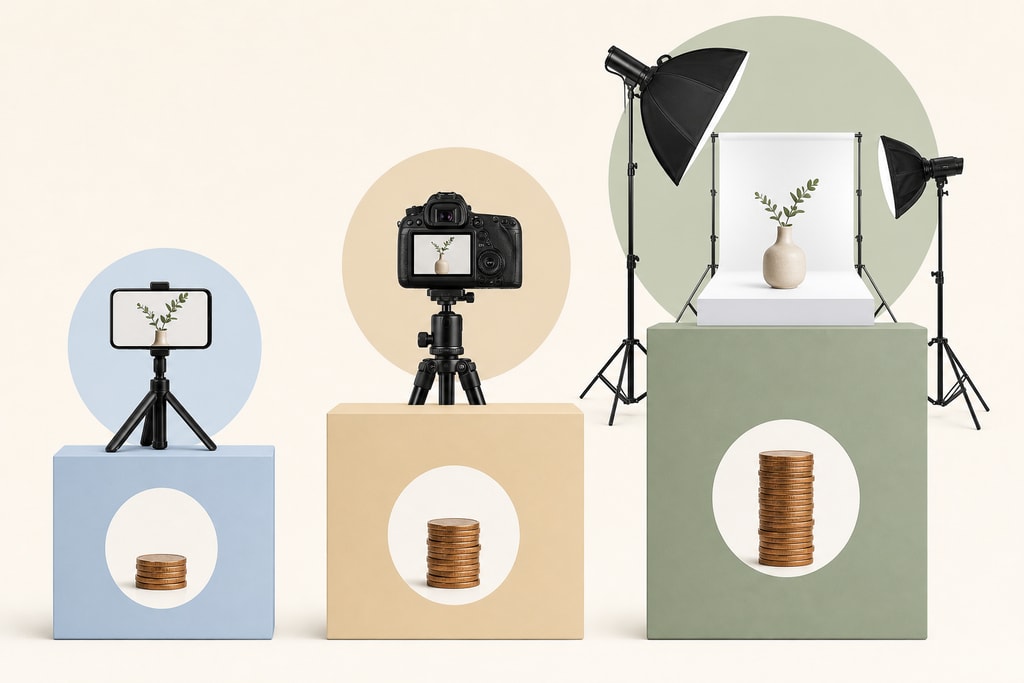
- Photography Method: You can choose between professional studios, in-house setups, DIY projects, or AI-enhanced solutions.
- Image Complexity: Basic white-background images cost less than lifestyle or model-involved shots.
- Post-Processing: Advanced retouching will impact overall costs.
- Volume: Large catalogs can leverage bulk pricing deals.
Practical Example: Calculate Your Needs
Use a Product photo cost calculator to tailor your budget according to your specific needs and volume.
Cost-Saving Strategies
1. Opt for DIY Photography with Affordable Equipment
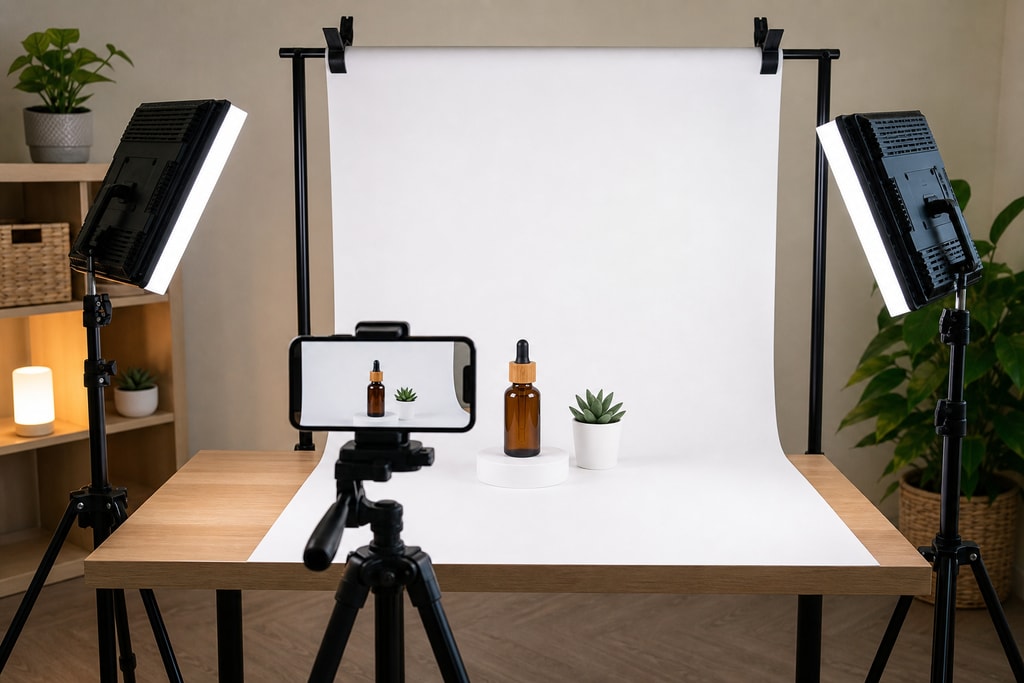
Creating a basic home studio can be economical. Consider these essentials:
- Camera: A modern smartphone or a budget DSLR.
- Lighting: LED lights or maximizing daylight.
- Backgrounds: Affordable options like seamless paper or lightboxes.
An example setup costs between $150 and $400, including basics like a tripod and lights.
Mistakes to Avoid
- Skimping on lighting quality.
- Ignoring color consistency across different backgrounds.
2. Utilize AI-Powered Photography Solutions
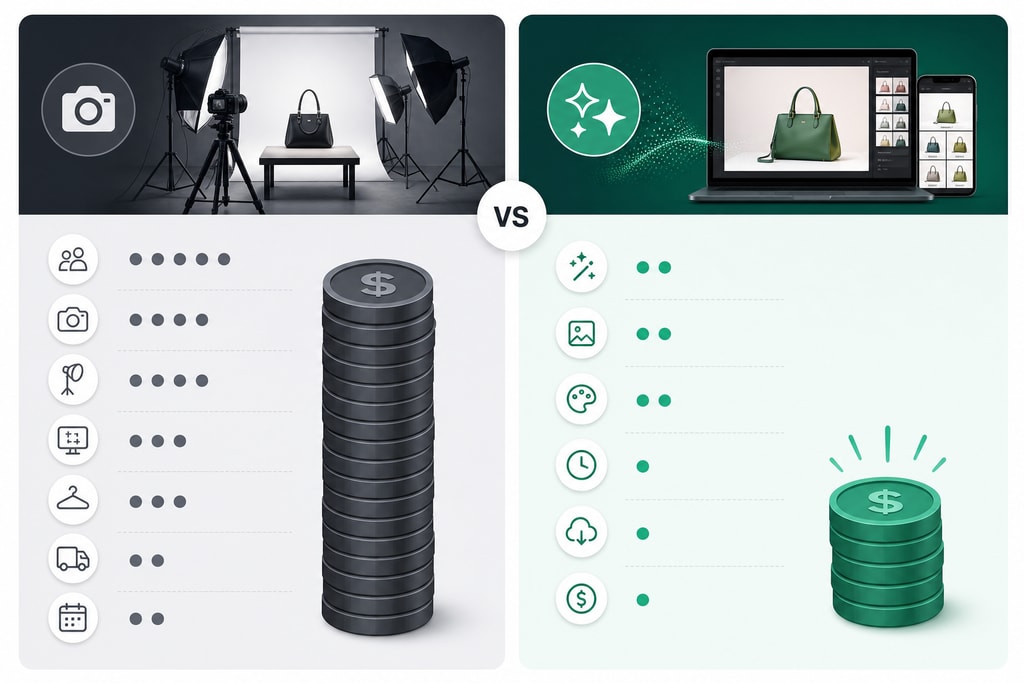
AI-driven platforms like ProdShot enhance ordinary photos into professional-quality images, cutting the need for expensive equipment. This approach suits marketplaces needing consistent photo quality.
Decision Criteria
- Speed: Quick turnaround with AI tools.
- Consistency: Uniform quality across multiple images.
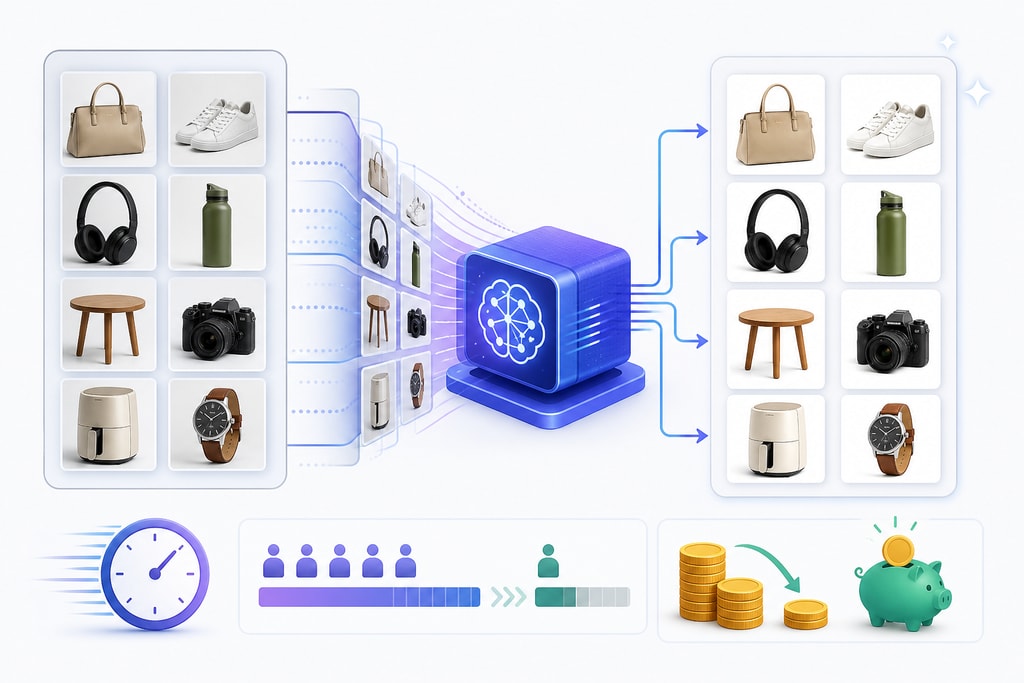
3. Batch Process Your Product Catalog
Batch processing can dramatically cut costs. Studios often offer discounts for volume, and AI tools can handle large jobs efficiently.
Example
Batch processing 200 products with AI can cost $3,000 over several days against $60,000 and weeks traditionally.
Considerations
- Evaluate your product range: uniform products benefit most from this approach.
4. Leverage Natural Lighting
Natural light can be a cost-effective alternative to professional lighting setups.
Practical Steps
- Place setups near large windows.
- Schedule shoots around optimal daylight.
Challenges
- Weather dependency: Cloudy days may alter planned shots drastically.
5. Simplify Your Backgrounds
Using simple backgrounds reduces both setup and retouching costs.
Tips
- White or neutral backdrops meet most e-commerce requirements.
- Simplify compositional elements to align with branding without clutter.
6. Plan and Organize Your Shoots
Detailed shoot planning enhances efficiency and minimizes resource use.
- Shot Lists: Prepare detailed lists to avoid unnecessary reshoots.
- Product Prep: Clean and organize products beforehand.
7. Outsource Editing to Cost-Effective Services
Outsourcing can often meet quality standards while cutting time costs. Ensure clear communication of your requirements.
Decision-Making: DIY vs. Professional Services
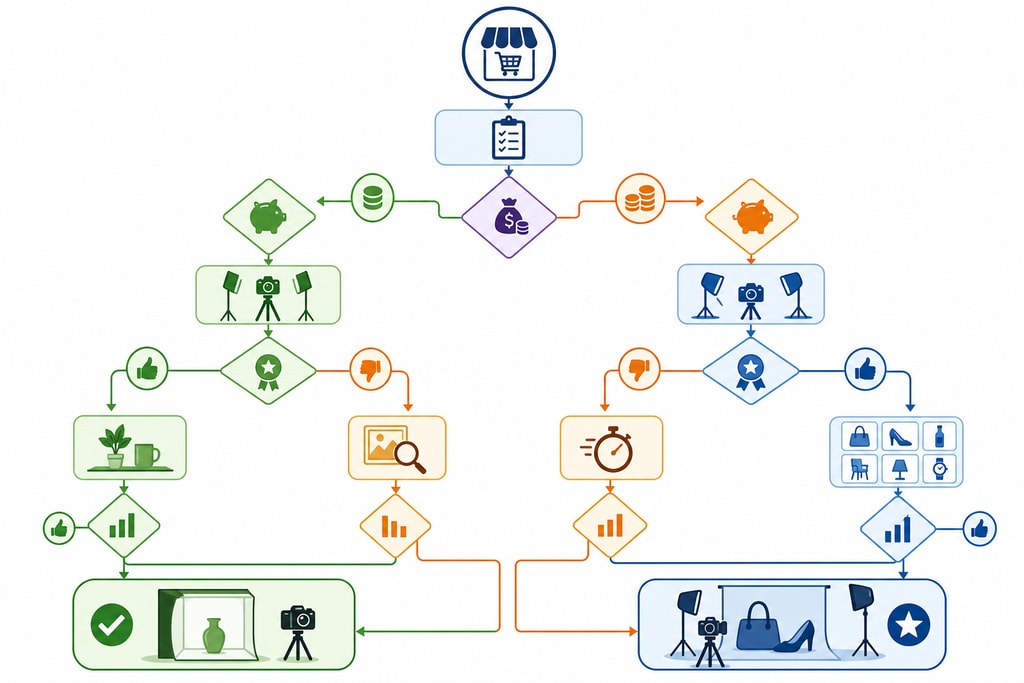
Choosing between DIY and professional services depends on multiple factors:
| Factor | DIY Approach | Professional Services | |————————|——————————————————————————|—————————————————————————————| | Cost | Initial savings; ongoing personal time investment | Upfront cost; saves personal time | | Quality Control | Direct control with a learning curve | Consistency from seasoned professionals | | Time Investment | Intensive time input for shooting/editing | Reduced involvement; benefits include quick turnaround | | Scalability | Challenging at scale | Professionally scalable; bulk discounts commonly available |
Frequently Asked Questions
Q: How much does professional product photography typically cost?
A: It varies, with studios charging between $30-$100 for basic shots. Prices rise with complexity. (lensespro.org)
Q: Can AI-generated images match professional photo quality?
A: AI like ProdShot provides marketplace-standard images, a competent alternative with advancements in technology.
Q: Is DIY product photography suited for all products?
A: It fits many products well, especially those manageable in size. Complex surfaces might need professional skills.
Q: How can I ensure color accuracy using natural lighting?
A: Use a color card during shooting to adjust colors accurately in post-processing.
Q: When is outsourcing editing more advantageous?
A: For high-volume projects or when expertise in specific retouching techniques is lacking.
Sources and Further Reading
- How much does e-commerce product photography cost?
- Product Photography 2026: E-Commerce Guide
- Product Photography Pricing: A Complete Guide
Incorporate these strategies for cost-effective yet high-quality product photography in your e-commerce ventures. Explore Create product photos for more personalized shooting solutions.