
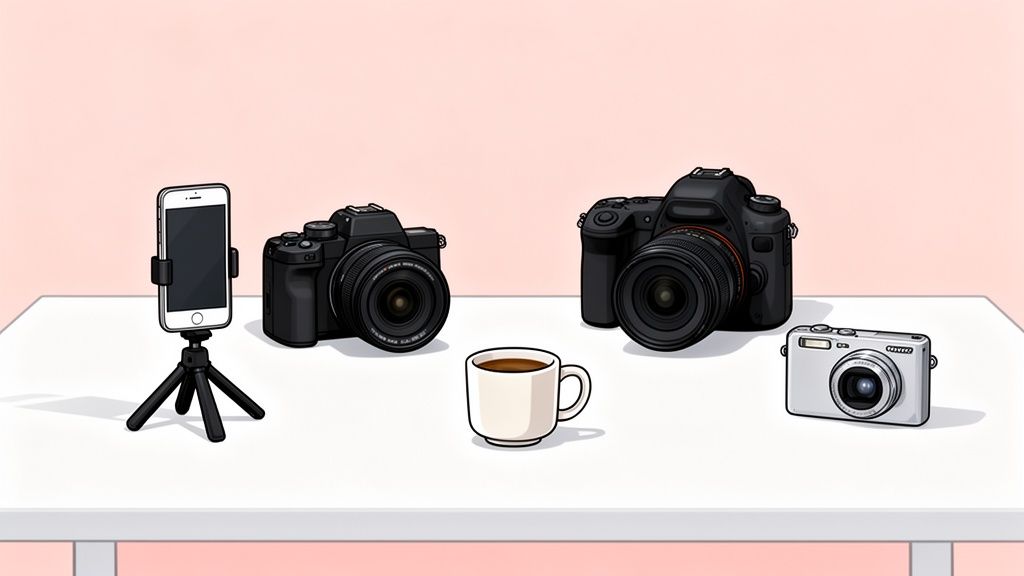
The best camera for your product photography might just be the one sitting in your pocket right now. Seriously.
When you pair it with good lighting and a little editing know-how, even a modern smartphone can produce incredible results. Of course, for those who crave total control and the absolute highest quality, a dedicated mirrorless or DSLR camera opens up a world of advanced features. It all depends on what you need.
Why Your Camera Choice Impacts E-commerce Sales
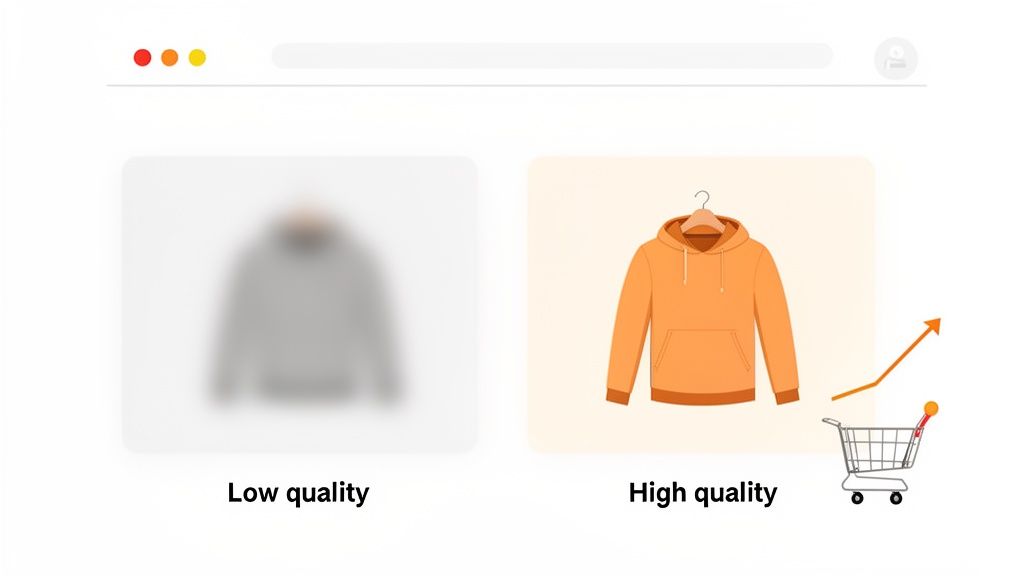
Think of your product photos as your star employees. They’re on the clock 24/7, acting as your digital storefront, greeting every visitor, and doing the hard work of convincing shoppers to hit that "add to cart" button. A blurry, poorly lit image is like a messy, unwelcoming shop window—it suggests a lack of care and can make potential buyers click away in an instant.
On the flip side, a crisp, vibrant, and detailed photo does all the selling for you. It screams quality, builds trust, and establishes your brand's credibility long before a customer even glances at your product description. This isn't just a hunch; the connection between image quality and sales is a powerful force in e-commerce.
The Financial Power of Professional Visuals
Investing in great visuals isn't an expense; it's a strategy that delivers real, measurable results. The global eCommerce product photography market was valued at USD 0.85 billion in 2025 and is projected to explode to USD 2.38 billion by 2034.
Why the massive growth? Because high-resolution images are no longer a "nice-to-have." They're a necessity that can boost conversions by up to 27% and slash product returns by giving buyers a crystal-clear idea of what they're getting.
This guide is here to cut through the noise and demystify the process of choosing a camera. The goal isn't to push you into buying the most expensive gear on the market. It's to give you the knowledge to pick the right tool for your products, your budget, and your business goals.
We’re going to cover:
- The key camera features that actually matter for product shots.
- A head-to-head comparison of smartphones, mirrorless cameras, and DSLRs.
- Why understanding the fundamentals of a good photo is far more important than owning a fancy camera.
The real goal here is to connect your need for more sales to the practical decision of choosing a camera. It’s about making a smart investment—whether that’s $0 or $2,000—that pays for itself through customer confidence and higher conversions.
At the end of the day, the camera is just one piece of the puzzle. As you'll soon see, things like lighting, your setup, and post-processing are just as crucial. To get a better feel for how all these elements come together, take a look at our breakdown of the cost of professional product photography, which shows where the real value is created.
Let's start by digging into what makes a camera truly effective for capturing product images that sell.
Understanding Key Camera Features for Product Shots
Diving into camera specs can feel like trying to read a different language. You see terms like "sensor size," "megapixels," and "aperture" everywhere, but what do they actually mean for your product photos? Let's cut through the jargon and get to what really matters.
Think of this as your guide to the "why" behind the tech. Once you understand these core features, you can look past the marketing hype and focus on what truly creates a high-quality product image that helps you sell more.
Essential Camera Features for Product Photography
Before we dive deep, here's a quick look at the most important camera specs and why they are critical for getting those crisp, professional-looking product shots.
| Feature | What It Is | Why It Matters for Products |
|---|---|---|
| Sensor Size | The physical size of the chip that captures light. | A larger sensor captures more light, resulting in cleaner, more detailed images with less "grain." This is key for showing off textures. |
| Megapixels | The total number of pixels (tiny dots) that make up an image. | Determines the image's resolution. 20-30 MP is perfect for sharp web images without needing massive file sizes. |
| Manual Controls | The ability to manually set aperture, shutter speed, and ISO. | Gives you complete control for consistent lighting, focus, and color across your entire product catalog. No more "Auto" mode surprises. |
| Interchangeable Lenses | The option to swap out different lenses on the camera body. | Allows you to use specialized lenses, like a macro for jewelry or a 50mm prime for a natural look, for much higher quality results. |
Understanding these four pillars is the first step toward choosing a camera that works for you, not against you.
The Heart of the Camera: Sensor Size
If there's one feature that impacts image quality more than any other, it's the sensor size. The easiest way to think about it is to imagine the sensor as a bucket designed to catch light. A bigger bucket catches more light, giving you a cleaner, more detailed picture with less digital noise (that ugly, grainy texture).
This is a game-changer for product photography. When you need to show the fine weave of a fabric or the brushed finish on a piece of jewelry, a larger sensor makes all the difference.
You'll generally run into two main sensor sizes:
- Full-Frame: This is the gold standard, the same size as classic 35mm film. Professionals love it because it pulls in the most light and detail, performing beautifully even when the lighting isn't perfect.
- APS-C (Crop Sensor): A bit smaller than a full-frame, but don't let that fool you. Modern APS-C cameras deliver fantastic quality that's more than enough for almost any e-commerce store. They also happen to be found in more affordable and compact cameras.
For most online sellers, an APS-C sensor hits the sweet spot between quality, performance, and price. You absolutely do not need to splurge on a full-frame camera to get professional-looking shots for your website.
Megapixels: Do They Really Matter?
Megapixels get all the marketing attention, but the truth is, more isn't always better. A megapixel is just one million pixels—the tiny dots that build a digital image. So, a 24-megapixel camera creates a photo out of 24 million tiny dots.
Sure, a massive megapixel count lets you print a giant billboard or crop a tiny section of your photo without it falling apart. But for web use? It’s rarely the most important factor. A camera with 20 to 30 megapixels is the sweet spot, providing all the resolution you need for crystal-clear images on Shopify, Amazon, or Instagram.
Instead of getting obsessed with megapixels, pay more attention to the sensor size. A 24-megapixel camera with a big sensor will almost always beat a 50-megapixel camera with a tiny one.
The Power of Manual Controls
Here’s the real secret to getting a consistent, professional look across your entire product catalog: manual controls. "Auto" mode is easy, but it guesses what your product should look like. This often leads to photos where the lighting and colors are all over the place from one shot to the next.
Manual mode puts you in control. It lets you lock in your settings so every single photo is captured the same way. You get to decide:
- Aperture (f-stop): This controls how much of your product is in focus. For product shots, you want everything sharp from front to back, which means using a higher f-stop number like f/8 or f/11.
- Shutter Speed: This sets how long the sensor is exposed to light. When you use a tripod, you can use slower shutter speeds to let in more light without any blur.
- ISO: This adjusts the sensor's light sensitivity. You'll want to keep the ISO as low as possible (like 100 or 200) to get the cleanest, most noise-free images.
By setting these yourself, you guarantee every product is shot with the same exposure and focus. It creates a cohesive storefront and makes editing a breeze. Even if the initial photos need a little help, having consistent settings is the first step. Mastering the basics of product photo retouching can then turn those good shots into great ones by ensuring backgrounds and lighting are flawless every time.
Lens Options: A World of Possibilities
Finally, choosing a DSLR or mirrorless camera opens up a huge advantage: the ability to change lenses. This is something you just can't do with a smartphone or most compact cameras, and the right lens can completely transform your images.
For product photography, a 50mm prime lens is the go-to recommendation for a reason. It gives you a natural perspective, is incredibly sharp, and is often surprisingly affordable. If you’re shooting tiny items like jewelry or small electronics, a dedicated macro lens is a must-have. It lets you get incredibly close to capture intricate details that other lenses would simply miss.
Comparing Camera Types: Smartphones, Mirrorless, and DSLRs
Picking a camera for product photography can feel like you're standing at a crossroads. Down one path is the sheer convenience of your smartphone. Down another, the modern power of a mirrorless camera. And then there’s the classic, trusted route of a DSLR.
Each one has its place, and the right choice really boils down to your business needs, your budget, and how much creative control you’re after. Let's break down the real-world pros and cons of these three main contenders to see which tool is the right fit for your e-commerce journey.
The Modern Smartphone: A Powerful Pocket Studio
Today's flagship smartphones are absolute marvels of computational photography. Their built-in AI processes images on the fly, churning out vibrant, sharp photos with almost zero effort. This makes them an unbeatable starting point for new sellers or anyone focused on speed and social media content.
The biggest win here is accessibility. You already own one, and the workflow is second nature: shoot, do a quick edit in an app, and upload straight to your store or Instagram. This speed is a lifesaver for fast-moving inventory or for creating that behind-the-scenes content that really connects with your audience.
But that convenience comes with trade-offs. The tiny sensors in smartphones still struggle in less-than-perfect lighting, and that "zoom" feature is usually just a digital crop that tanks your image quality. While you can get some amazing results, you're often boxed in by a fixed lens and the software’s automated decisions, which can sometimes "over-correct" an image, leaving it looking a bit unnatural.
Key Takeaway: A modern smartphone is more than capable for e-commerce, especially if you have good lighting and a tripod. It's the ultimate tool for efficiency, perfect for brands that prioritize speed and a strong social media game.
Mirrorless Cameras: The Modern Sweet Spot
Mirrorless cameras have hit that perfect balance of quality, size, and cutting-edge tech. By ditching the bulky mirror mechanism found in traditional DSLRs, these cameras are lighter, more compact, and packed with features that are incredibly handy for product photography.
One of their killer features is the electronic viewfinder (EVF). The EVF gives you a live digital preview of your final image, showing you exactly how your exposure, white balance, and depth of field will look. This "what you see is what you get" approach slashes the learning curve and helps you nail the shot way faster.
They also tend to have far superior autofocus systems and often include amazing video capabilities—a huge plus if you’re thinking about creating product videos for your listings. Their growing ecosystem of high-quality lenses means your creative options are practically endless, from wide lifestyle shots to detailed macros. The combination of portability and power makes them a favorite for growing brands.
This is the fastest-growing corner of the camera world for a reason. In fact, the market for product photography equipment is projected to hit USD 159.5 million in 2025 and more than double to USD 422.5 million by 2034. This explosion is driven by demand for cameras like full-frame mirrorless models, which excel at capturing the tiny details needed for products like jewelry or electronics. You can dive deeper into how visuals impact business by exploring the key benefits of product photography.
DSLRs: The Traditional Workhorse
For decades, the DSLR (Digital Single-Lens Reflex) was the undisputed king for professional photographers, and for good reason. They're built like tanks, they're reliable, and they have a massive ecosystem of lenses built up over many years—many of which you can now find for a steal on the used market.
Their optical viewfinders give you a direct, unfiltered view right through the lens, which many photographers still prefer for a clear, lag-free way to compose their shots. DSLRs also tend to have fantastic battery life since the screen isn't constantly drawing power like a mirrorless EVF.
On the flip side, DSLRs are generally heavier and bulkier than their mirrorless cousins. Their technology, while proven, isn't advancing as quickly. For instance, their autofocus systems—especially when using the back screen in "live view"—can feel slow and clunky compared to the snappy on-sensor systems in modern mirrorless cameras. While still a fantastic camera for product photography, most manufacturers are now focusing their efforts on mirrorless tech.
This flowchart offers a simple way to think through which features matter most for you.
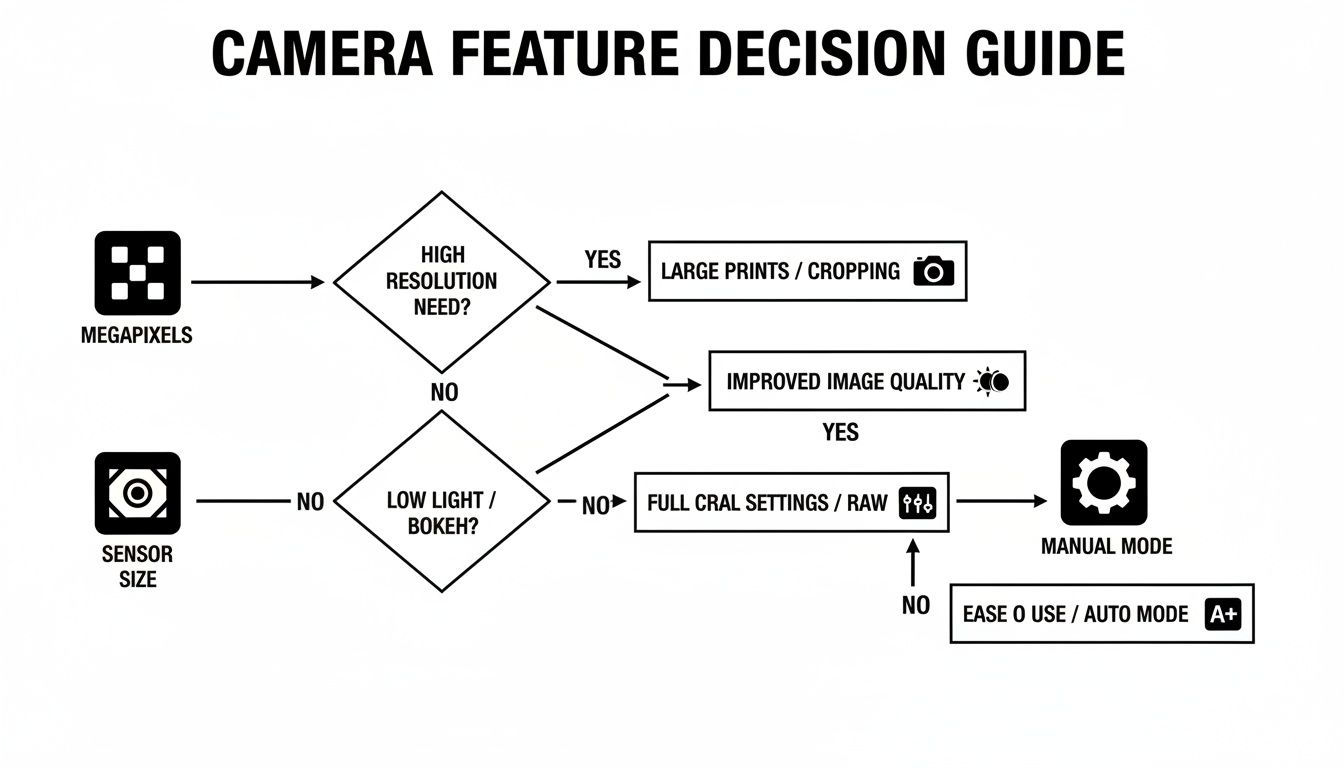
As the guide shows, it helps to start by thinking about your resolution needs, then sensor size for quality, and finally the level of creative control you want.
Which Camera Should You Choose?
Making the final call is all about matching the camera’s strengths to your specific business. This table lays it all out to help you see the trade-offs at a glance.
Camera Type Comparison for Online Sellers
| Camera Type | Pros | Cons | Best For |
|---|---|---|---|
| Smartphone | – Super convenient and portable – Simple, fast workflow for social media – No extra cost if you already have one |
– Limited manual control – Small sensor struggles in low light – Fixed lens and poor digital zoom quality |
– New sellers on a tight budget – Brands with a high volume of products – Creating quick social media content |
| Mirrorless | – Fantastic image quality in a compact body – "What you see is what you get" EVF – Superior autofocus and video features |
– Can have shorter battery life than DSLRs – Newer lenses can be more expensive |
– Growing e-commerce businesses – Sellers wanting a balance of quality and portability – Anyone planning to shoot product videos |
| DSLR | – Great ergonomics and durability – Huge selection of affordable used lenses – Long battery life with optical viewfinder |
– Bulkier and heavier than mirrorless cameras – Technology is not advancing as quickly – Slower autofocus when using the screen |
– Photographers who prefer an optical viewfinder – Sellers looking for value in the used lens market – Studio work where size isn't a problem |
Ultimately, the best camera for product photography isn't about having the most expensive gear. It’s about choosing the right tool that empowers you to create clean, consistent, and compelling images that build trust with your customers and drive sales.
Top Camera Recommendations for Every Budget
Alright, we’ve covered the tech specs and the different types of cameras out there. Now for the fun part: picking the right gear for your business. Think of a camera as an investment. It doesn't have to be a confusing or wallet-busting one, but the right choice can make a world of difference.
To make things simple, I’ve broken down my favorite picks into three budget levels. Whether you're just dipping your toes in or building out a full-blown studio, there’s a perfect fit for you here. Each one is on this list for a reason—they all give you the manual controls, sensor quality, and lens options you need to get the job done right.
Getting Started Under $500
This is the sweet spot for getting the most bang for your buck. We're talking about getting your hands on professional-level features without that professional price tag. These are the workhorses that give you full manual control to create clean, consistent, and high-quality product shots from the get-go.
My top recommendation here is to look at a slightly older, used DSLR like the Canon EOS Rebel T7 or the Nikon D3500. You can find these for a steal on the used market, and they open up a massive world of affordable, fantastic lenses. They have great APS-C sensors and, most importantly, give you the full manual control that's non-negotiable for product photography.
Pair one of those bodies with this lens, and you're golden:
- 50mm f/1.8 Prime Lens: Everyone calls it the "nifty fifty" for a reason. This lens is a must-have. It’s incredibly sharp for the price, and its focal length gives you a natural, true-to-life perspective that’s perfect for almost any product.
For under $500, a used DSLR and a 50mm prime lens is an unbeatable combo. It will give you miles more control and quality than any smartphone, setting you up for pro-looking shots right out of the gate.
Upgrading Your Shop: $500 to $1500
Ready to step things up? This budget range is where you can jump into modern mirrorless cameras. The upgrades are significant—you’ll see huge improvements in autofocus, video quality, and handy features like electronic viewfinders that let you see your exposure before you even press the shutter.
The Sony a6400 is a real standout here. Its autofocus is lightning-fast and dead-on reliable, which is a massive time-saver. It’s also compact and easy to work with. Plus, it shoots fantastic 4K video, a huge bonus if you want to create product reels for social media. Another fantastic option is the Fujifilm X-T30 II, which people adore for its beautiful color science and tactile, old-school dials that just make shooting more fun.
When it comes to lenses, getting a true macro lens will completely change your game for smaller products.
- Sigma 70mm f/2.8 DG Macro Art Lens: This lens lets you get right up close to capture every intricate detail on jewelry, textiles, or electronics. It is exceptionally sharp and a worthy investment for any e-commerce seller who's serious about their photos.
This pairing—a modern mirrorless camera and a dedicated macro lens—gives you the power and versatility to really elevate your online store.
Pro-Level Studio: Over $1500
For businesses where every pixel counts, investing in a full-frame camera system is the final frontier. A full-frame sensor is the largest you can get before jumping to wildly expensive medium-format systems. It captures an incredible amount of light and detail, producing stunningly clean, high-resolution images perfect for big prints, detailed website zooms, and high-end advertising.
Here, you're looking at professional powerhouses like the Sony a7 IV or the Canon EOS R6 Mark II. These cameras deliver breathtaking image quality, industry-leading autofocus systems, and are built tough for daily studio use. Their high-megapixel sensors give you massive flexibility to crop and reframe your shots in post-production without losing a shred of detail.
Of course, a pro camera needs a pro lens to truly shine. The Canon RF 100mm f/2.8L Macro IS USM or the Sony FE 90mm f/2.8 Macro G OSS are the top dogs. They deliver a level of sharpness and clarity that has made them industry standards for high-end commercial and product photography.
At this level, you’re not just buying a camera. You’re investing in a complete professional imaging system that can handle any challenge you can imagine.
Let's be honest, getting studio-quality product photos is a huge pain. You need an expensive camera, a bunch of confusing lights, and a whole lot of patience. For most e-commerce sellers trying to get products listed, a full-blown photoshoot is a massive roadblock of time, skill, and money.
But what if you could skip all that? What if you could take a quick snapshot with your phone and have smart technology handle the rest—perfecting the light, adding realistic shadows, and dropping in a clean white background automatically? This isn't science fiction; it's exactly what AI-powered tools are doing for sellers right now.

Your Virtual Photo Studio
Think of these tools as a 'virtual photo studio' that lives in your browser. They completely level the playing field, giving anyone access to professional-grade images, no matter their budget or photography skills. If you're selling on Shopify, Amazon, or Etsy, this is a total game-changer. The pressure to get new products online fast, without making them look cheap, is real.
Instead of blocking out hours to set up lights or spending days fiddling with photo editing, you can get images ready for your marketplace in just a few seconds. That speed and consistency are what help you build a polished, trustworthy storefront that actually converts visitors into customers. It boils down a complicated, multi-step headache into a simple upload-and-download workflow.
AI photography doesn’t kill creativity; it just automates the tedious technical stuff. This frees you up to focus on running your business while your products always look their absolute best.
The move toward more flexible visual solutions is already well underway. The market for subscription-based photography services is growing at 19% a year, which shows just how tired people are of big, one-time camera investments. And for good reason—industry data shows that 80% of DIY product photos miss the mark because of bad lighting and awkward angles. This can lead to 30% higher return rates. AI fills that gap, delivering pro-level results from a simple phone picture.
How AI Turns a Simple Snapshot into a Great Product Photo
The magic behind these platforms comes from sophisticated algorithms that have been trained on millions of high-quality commercial images. They've essentially learned what makes a product photo look good.
Here's a quick look at how it works:
- Background Removal: The AI instantly snips out the original background from your photo with incredible precision. No need for a physical white backdrop or wrestling with Photoshop's selection tools.
- Smart Lighting & Shadows: Next, it analyzes your product to cast realistic lighting and soft, natural shadows. This gives the item depth and dimension, making it look like it was shot by a pro.
- Scene Generation: Many tools, like our own AI product photo generator, can even place your product into brand-new lifestyle scenes. This is perfect for creating eye-catching images for social media or ad campaigns.
This whole process is automated, ensuring every single product image in your catalog looks clean, consistent, and ready to sell. If you're curious about how this tech is shaking up other areas of visual content, you can find great resources that explore AI in video marketing, too. By taking care of all the technical details, AI gives you the power to create scroll-stopping visuals with nothing more than the phone you already have.
Common Questions About Product Photography Cameras
Diving into the world of cameras can feel overwhelming, especially when your sales hang on the quality of your images. Let's cut through the noise and get you some clear, straightforward answers to the questions I hear most often from online sellers.
Do I Really Need a Full-Frame Camera?
Honestly? Not at all. Full-frame cameras are incredible, but modern APS-C (crop sensor) cameras are more than powerful enough to create stunning, high-resolution images that look fantastic on sites like Shopify or Amazon.
You’ll get a much bigger bang for your buck by putting that money toward better lighting and a quality lens instead of a bigger sensor. A great photo is a team effort between your gear, not the result of one single expensive part.
What Is the Best All-Around Lens?
For anyone just starting out, the 50mm prime lens is the undisputed champion. It gives you a natural perspective, almost exactly how the human eye sees things. It’s also incredibly sharp, and the wide aperture is perfect for creating that clean, professional look with a soft background.
It's an affordable workhorse that can handle a massive range of products. The one exception? If you're shooting tiny items like jewelry or watches, you'll want to invest in a dedicated macro lens to capture all those crucial little details.
Can I Get Professional Results with Just My Smartphone?
Absolutely, but it’s all about technique and a few key tools. The cameras packed into modern smartphones are shockingly powerful. To really make them sing, you need to take control. That means managing your lighting, using a tripod to keep things steady, and using an app that lets you manually adjust your camera settings.
The biggest leap in quality, however, happens after you press the shutter. The raw photo is just your starting point. Using an AI tool to handle the tedious stuff like background removal and lighting adjustments can turn a good smartphone photo into a flawless, studio-quality image that's ready to make you money.
Ready to skip the expensive gear and complicated setups? ProdShot turns your simple smartphone photos into perfect, marketplace-ready images in seconds. Try it for free and see just how easy professional product photography can be.