

Ready to turn that clutter into cash? Selling on Facebook Marketplace is simpler than you think. It's really just about taking good photos, writing a clear description, and setting a fair price. Once you post, you'll want to be ready to chat with buyers and arrange a safe pickup. That's it. This straightforward approach can turn your unused stuff into extra money without a huge hassle.
Your Starting Point for Selling on Facebook Marketplace
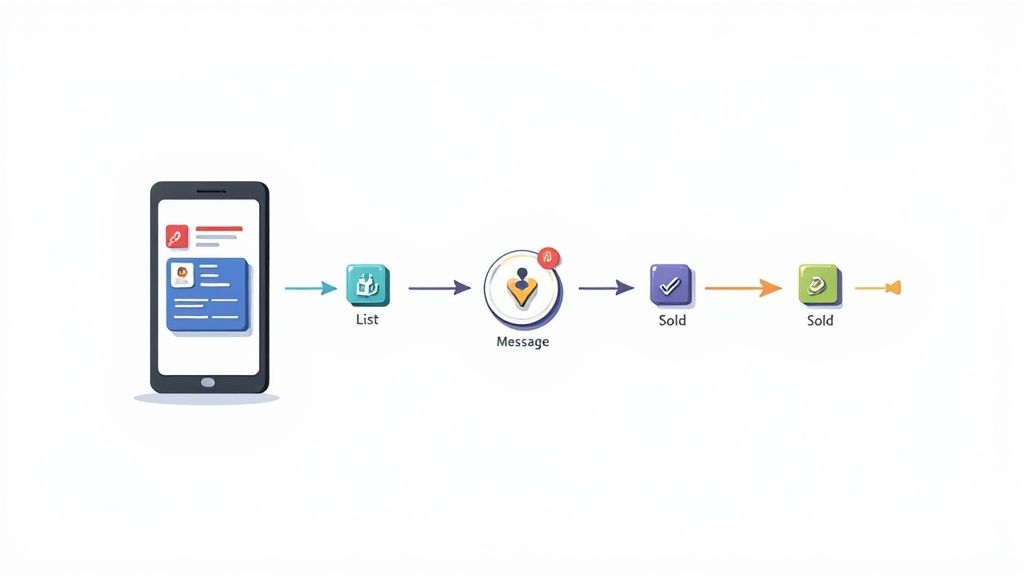
Think of Facebook Marketplace as one giant, ongoing digital garage sale—and it is massive. Before you jump in and list your first item, it helps to grasp just how big this platform is. We're talking about 1.1 billion monthly active users spread across 228 countries as of 2025. That scale makes it the undisputed king of social commerce, holding a whopping 51.2% of the market share.
That incredible reach means there's a huge local audience for that old couch you've been meaning to get rid of or the vintage camera gathering dust on your shelf. The secret to success isn't just posting and hoping for the best. It’s about being strategic from the get-go, focusing on building trust and making the whole process clear and simple for buyers.
The Foundation of a Great Listing
To grab a buyer's attention right away, every single listing needs a few core components. Getting these basics right is what separates the successful sellers from the ones whose items sit for weeks.
- High-Quality Photos: Your pictures are your sales pitch. They need to be bright, clear, and show the item from every important angle. If you're serious about making your stuff look good, it's worth understanding the cost of professional product photography to see what separates a pro shot from a quick snap.
- An Informative Title: Put yourself in the buyer’s shoes. What words would they use to search for your item? Always include the brand, item name, and key details like its color or size.
- An Honest Description: Be upfront about the item’s condition, list its dimensions, and point out any flaws. Answering questions before they’re even asked builds a ton of confidence and saves everyone time.
A successful seller on Facebook Marketplace thinks like a helpful neighbor, not just a retailer. The more transparent and communicative you are, the faster your items will sell and the better your reputation will become.
This mindset works whether you're selling a common household item or something more unique. If you're dealing with specialized goods, a guide on how to sell antiques online has some great advice on valuing and listing items that you can easily adapt for Marketplace.
To make things even easier, I've put together a quick checklist to help you nail your first listing.
Quick-Start Checklist for Your First Listing
Here’s a simple table breaking down the must-haves for a listing that gets results. Think of it as your recipe for a successful first sale.
| Component | Why It's Important | Pro Tip |
|---|---|---|
| Crystal-Clear Photos | This is the first thing buyers see. Great photos stop the scroll and build immediate trust. | Take pictures in natural light against a neutral background. Show all angles, including any defects. |
| Search-Friendly Title | A good title helps buyers find your item. It’s your primary keyword real estate. | Include brand, model, size, color, and what the item is. Be specific! "IKEA Kallax 4×4 White" is better than "Shelving Unit." |
| Detailed Description | This is where you answer questions upfront, saving you time and weeding out unserious buyers. | Include dimensions, condition (e.g., "like new," "good condition with minor scuffs"), and reason for selling. |
| Competitive Pricing | Pricing it right is key to a quick sale. Too high, and it will sit; too low, and you lose money. | Search for similar items on Marketplace to see what they sold for. Price slightly higher to leave room for negotiation. |
| Correct Category | Placing your item in the right category makes it discoverable to people actively looking for it. | Don't just pick the first category that seems close. Dig a little to find the most accurate one. |
| Location Accuracy | Buyers filter by location, so getting this right ensures local shoppers see your listing. | Double-check your listed pickup location. If you're willing to meet elsewhere, mention that in the description. |
Following these steps for every listing creates a repeatable process that will help you sell faster and with less back-and-forth. It’s all about making it as easy as possible for someone to say "yes" to your item.
Creating Listings That Actually Attract Buyers
A great listing is the single biggest factor that separates a quick sale from an item that just sits there, gathering digital dust. It's so much more than just uploading a photo and slapping a price on it. You're essentially crafting a miniature sales page that has to answer questions, build trust, and convince a buyer to message you instead of the ten other people selling a similar thing.
Think of your listing as the digital handshake. Your goal is to make a strong first impression that stops a buyer mid-scroll. On Facebook Marketplace, success often comes down to who provides the clearest, most trustworthy information right from the get-go.
Write Titles That Get Clicks
Your title is your headline—it has one job: get the right person to click. It has to be both descriptive and friendly to the search bar.
A vague title like "Nice bookshelf" is going to get completely lost in the noise. A truly effective title includes the key details a serious buyer would actually type into their search.
If it applies, you should always try to include:
- Brand Name: (e.g., West Elm, Sony, Nike)
- Item Type: (e.g., Dining Table, PlayStation 5, Air Jordan Sneakers)
- Key Descriptors: (e.g., Mid-Century Modern, 500GB, Size 10)
- Condition: (e.g., "Like New," "Gently Used," "For Parts")
So instead of "Nice bookshelf," a much better title would be: "West Elm Mid-Century Modern Acacia Wood Dining Table – Seats 6." See the difference? That title is packed with keywords that a motivated buyer is probably using, which dramatically boosts your chances of being seen.
Craft Descriptions That Build Trust
After the photos and title hook them, the description is what seals the deal. This is your chance to be completely transparent and answer questions before they're even asked. I can't stress this enough: honesty is your best policy here. It immediately filters out the tire-kickers and builds confidence with the right buyers.
I like to think of a good description as a quick, helpful conversation with the buyer. Be personable but direct. For instance, instead of just saying "works great," try something like, "Fully functional with no issues, just selling because we upgraded to a larger model." That little extra detail adds a layer of authenticity that people really respond to.
A detailed description minimizes the endless back-and-forth messages. By providing dimensions, condition specifics, and pickup details upfront, you save yourself a ton of time and attract buyers who are genuinely ready to make a move.
Don't forget the practical stuff:
- Measurements: Always provide the length, width, and height.
- Flaws: Be upfront about any scratches, dents, or defects. A close-up photo of the flaw is even better.
- Reason for Selling: This adds a human touch and can really increase trust.
- Pickup Details: Specify your general area (e.g., "North Austin area") and mention if you can help load the item.
The Power of Visuals and Editing
Let's be real: your photos are the heart and soul of your listing. Alongside good pictures, a little bit of editing can make a massive difference in how much people think your item is worth.
You don't need to be a professional photographer, but a polished image can definitely command a higher price and attract more serious inquiries. Using a straightforward Shopify photo editor can help you create clean, bright images by removing distracting backgrounds or just adjusting the lighting. It’s a simple step that makes your item look as appealing as possible without needing to learn complex software, and it immediately elevates your listing above the countless others with dark, blurry photos.
Mastering Product Photography and Visual Appeal

Let's be real: on Facebook Marketplace, your photos are doing 90% of the selling. They’re your first impression, your digital handshake, and the single biggest reason someone stops scrolling to check out your item.
The good news? You absolutely don't need a fancy DSLR camera. Your smartphone is more than powerful enough to take pictures that get things sold. The secret isn't the gear—it's knowing how to use it.
Let There Be (Natural) Light
If you only change one thing about how you take photos, make it this: use natural light. Seriously. Find a spot near a big window where the light is bright but not hitting your item directly. Harsh, direct sunlight creates ugly shadows that hide details, while a dark room just gives you grainy, sad-looking pictures.
Try setting up your item during the day and see the difference. The colors will look true-to-life, and the whole image gets a clean, professional vibe instantly, without any special equipment. It's a tiny tweak with a massive payoff.
Your goal is to present your item in the best possible light, literally. A well-lit photo taken with a phone is always better than a poorly lit one from an expensive camera. Clarity and brightness build immediate trust with potential buyers.
Once your lighting is on point, it’s time to create a simple scene that lets your product be the star. This is all about the background and angles.
Nothing screams "amateur" faster than a cluttered background. You want the buyer’s eyes locked onto what you’re selling, not the laundry pile in the corner.
- Go for a Simple Backdrop: A plain wall, a clean patch of floor, or even a solid-colored sheet works wonders.
- Show Every Angle: Don't be shy. Take shots of the front, back, sides, and any cool features. Selling a dresser? Open the drawers and snap a picture.
- Photograph the Flaws: This is a big one. If there’s a scratch or a tiny dent, take a clear, close-up photo of it. Being upfront builds huge trust and saves you from headaches later.
To make sure your photos look as sharp on the app as they do on your phone, you need to get the dimensions right. It's worth checking a guide to optimal Facebook post sizes to prevent Facebook from awkwardly cropping or blurring your hard work. When you upload images with the right specs, you ensure they show up exactly how you intended.
After you’ve got the shots, a little bit of editing can take them from good to great. If you want to streamline the process, exploring tools for Facebook Marketplace selling photo editing can be a total game-changer. They can help you instantly remove backgrounds and enhance your images for that polished, professional look that stands out from the crowd.
Strategic Pricing and Understanding Market Demand
Pricing your stuff on Facebook Marketplace is a delicate dance. Ask for too much, and all you’ll hear are crickets. Price it too low, and you're literally giving away money. The goal is to find that perfect sweet spot where both you and the buyer feel like you’re getting a fair deal, which is the secret to a quick, painless sale.
The first thing you need to do is a little market research. Don't worry, it's easier than it sounds. Just hop onto Marketplace and search for items just like yours. But here's the key: don't just look at what people are asking. You want to see what things are actually selling for. If the app allows, filter your search to show "Sold" listings. This is the real goldmine of information—it tells you what people are genuinely willing to pay, not just what sellers are hoping to get.
Factors That Define Your Price
Once you have a ballpark figure, it's time to get specific about your item. No two "used" couches are the same, and savvy buyers know it. Be brutally honest with yourself about where your item lands on the spectrum.
- Condition is King: An item that's "like new" can easily fetch 70-80% of what it cost new. If it's got some dings, scratches, or visible wear, you're probably looking at closer to 30-50%.
- Brand Recognition: A well-known brand like West Elm or Sony just holds its value better than some generic, no-name equivalent. Make sure you put that brand name front and center in your title.
- Age and Model: This one is a bit of a double-edged sword. For tech and appliances, an older model is almost always worth less, even if it’s in mint condition. But for furniture, a vintage or antique piece could actually be worth more.
It also pays to know what's hot right now. Data from 2024 and 2025 consistently shows that furniture, clothing, and electronics are the top three best-selling categories. If you're selling in one of these areas, you're already ahead of the game. For a deeper dive, you can check out guides on the most profitable items to sell online.
The Psychology of Pricing and Negotiation
The way you present your price can make a huge difference in how buyers react. You've basically got two main routes: pricing firm or opening the door for offers.
Stating your price is firm sends a clear signal: you know what your item is worth, and you're not here to haggle. This approach is fantastic for popular, in-demand items you know will sell. It instantly filters out the lowballers and saves you a ton of back-and-forth messaging.
On the other hand, adding "OBO" (Or Best Offer) to your listing is like putting out a welcome mat for negotiation. It’s a great tactic for items with a less defined value or when your main goal is just to clear it out fast. It makes buyers feel like they have a shot at a great deal, which can bring in a flood of initial interest.
Pro Tip: If you're going the OBO route, a good rule of thumb is to price your item about 15-20% higher than the absolute lowest you'll take. This gives you some wiggle room to negotiate. The buyer gets to feel like they "won" by talking you down, and you still walk away with the price you wanted all along.
Working with Buyers and Making the Sale
Once your listing is live, get ready for the messages to start rolling in. This is where your people skills become just as crucial as your product photos. How you handle these initial chats can mean the difference between a quick, easy sale and a frustrating back-and-forth that goes nowhere.
The key is to be responsive, polite, and firm. When someone messages you, try to get back to them as quickly as you can. A speedy reply shows you're a serious seller and keeps their interest piqued before they scroll on to the next thing.
Setting the Tone for a Smooth Transaction
Your first interaction really sets the stage for everything that follows. Aim for a friendly and helpful vibe, but don't be afraid to be direct.
Most of your initial messages will be the generic "Is this still available?" click. The best way to handle this is to have a simple, copy-paste response ready to go.
Something like this works wonders: "Yes, it's still available! Feel free to ask any questions, or let me know when you might be free for pickup in the [Your Neighborhood] area." This confirms availability and immediately nudges the conversation toward the next step, which helps weed out the tire-kickers.
It's also a numbers game. By 2024, the platform was projected to generate $30 billion in annual revenue, with its user base climbing toward 1 billion globally. That massive scale means you're dealing with a huge audience of both serious buyers and total time-wasters. You can find more insights into Facebook Marketplace's incredible growth on scoop.market.us.
Navigating Negotiations and Lowball Offers
Haggling is just part of the Marketplace culture, but it doesn't have to be a battle. Every seller has to deal with the dreaded lowball offer—like someone offering $20 on your $100 item. The worst thing you can do is get offended or just ignore them.
Instead, have a game plan. A polite but firm "No, thank you" is often enough. If you want to keep the conversation alive, you can always try a counteroffer.
Pro Tip: A simple and effective response to a lowballer is, "Thanks for the offer, but the lowest I can go is [Your Bottom Price]." This acknowledges their interest while clearly stating your limit, often bringing the negotiation to a much more reasonable place.
Remember, if you listed your item as "OBO" (Or Best Offer), you've basically invited people to negotiate. If your price is firm, make sure you state that clearly in your description to minimize the haggling from the get-go.
Spotting Scams and Avoiding Time-Wasters
Unfortunately, not every message comes from a legitimate buyer. Learning to spot the red flags is a critical skill for a safe and successful sale.
Be wary of buyers who:
- Offer to pay more than your asking price. This is a classic scam, usually involving a fake check or a fraudulent payment that will eventually bounce.
- Push for weird payment methods. If they insist on wire transfers, gift cards, or anything outside of cash or a secure platform payment, it’s a major red flag.
- Refuse to meet in person for a local pickup. While shipping is an option, a local buyer who makes endless excuses not to meet is highly suspicious.
- Use vague language or have a brand-new, empty profile. These can be signs of a scam account created just for this purpose.
Ultimately, you have to trust your gut. If a conversation feels off or a buyer is overly pushy, it’s perfectly fine to just stop responding and move on to the next person. Your safety and peace of mind are always the top priority.
Finalizing the Sale Safely and Efficiently

Alright, you've sifted through the messages, settled on a price, and now it's time to close the deal. This last part is all about making the actual transaction smooth, safe, and easy for everyone involved. Getting this right isn't just about making the sale; it’s about protecting yourself and building a reputation as a great seller people can trust.
Let's be clear: your safety is always the top priority. While the huge majority of Facebook Marketplace deals go off without a single issue, it just makes sense to be smart about it, especially when you're meeting a stranger in person.
Arranging a Safe and Convenient Meetup
Where you choose to meet can make all the difference. My number one rule? Never, ever invite a buyer to your home. It's just not worth the risk.
Instead, pick a public spot that's well-lit and has people coming and going. Think security cameras and foot traffic.
Here are a few go-to options that have always worked for me:
- Police Station Lobbies: You can't get much safer than this. Many police departments even have "safe exchange zones" set up in their parking lots just for this purpose.
- Busy Supermarket Parking Lots: Find a spot right near the entrance, and always try to meet during daylight hours.
- Local Coffee Shops: If you're selling something small, a bustling café is a great, low-key setting.
And one last thing before you head out: shoot a quick text to a friend or family member. Let them know where you're going, who you're meeting, and what time you plan to be back. It's a simple step that adds a huge layer of security.
Handling Payments Securely
When it's time to get paid, you've got a couple of choices. For local pickups, cash is king. It’s instant, simple, and there’s zero risk of a digital payment getting reversed or failing to go through.
If you or the buyer really prefer a digital payment, stick to mainstream apps like PayPal or Venmo. If you're using PayPal, always ask the buyer to send the money using the "Goods & Services" option. This gives both of you a layer of protection that the "Friends & Family" option completely strips away.
Before you hand over the item, always confirm the money is actually in your account. A common scam is for someone to flash a fake payment confirmation screen on their phone. Take a second to open your app and verify it yourself.
After the Exchange, Mark It as Sold
Once the item is gone and the money is in your hand, there's just one tiny thing left to do: update your listing. Jump back into Facebook Marketplace and mark the item as "Sold."
This is more than just tidying up. It immediately stops the flood of new messages from people asking if your item is still available. It also keeps your seller profile looking clean and professional, signaling to future buyers that you’re an active and considerate seller.
Got Questions? Let's Talk Marketplace Selling
Selling online, especially on a platform as busy as Marketplace, always brings up a few questions. Whether you're listing your first hand-me-down or you're a seasoned pro, a few common scenarios tend to pop up. Let's walk through some of the most frequent queries I hear from sellers.
How Do I Actually Get People to See My Stuff?
Getting more eyes on your listings really comes down to mastering the basics. Start with crisp, well-lit photos and a title packed with keywords people would actually search for.
One of the best-kept secrets is simply renewing your listing. After seven days, Facebook lets you bump it right back to the top of the search results. It's a free and easy way to get a fresh wave of views. Also, don't just post and pray—share your listing in relevant local buy-and-sell groups. This is a surefire way to expand your reach to genuinely interested buyers right in your own community.
The safest transaction is often the simplest. For local pickups, cash eliminates any risk of digital payment scams or chargebacks, ensuring you get paid without any complications.
What's the Best Way to Get Paid?
When you're meeting someone in person, cash is king. It’s immediate, secure, and there's absolutely no chance of a buyer trying to reverse the charge later on. It just works.
If you have to go digital, stick with platforms that offer seller protection, like PayPal’s "Goods & Services" option. No matter what, always, always confirm the money is actually in your account before you hand over the item.
Ugh, My Buyer Never Showed Up. Now What?
It’s frustrating, but it happens more often than you’d think. If a buyer goes silent, just send one polite follow-up message. If you don't hear back within a day or so, it's time to move on to the next person in line.
For a no-show at a meetup, give them a reasonable grace period—maybe 15 minutes—before you consider the deal off and head home. Don't waste your whole day waiting.
Ready to make your product photos stand out from the competition? ProdShot uses AI to turn your simple smartphone pictures into professional-quality images in seconds, helping you sell faster. Try it for free today at ProdShot.