
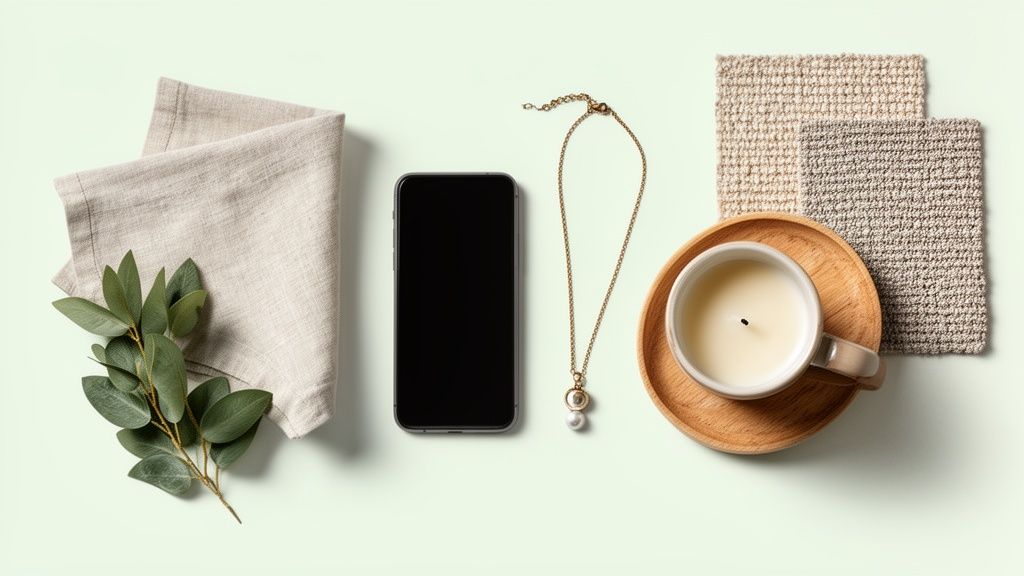
Choosing the right props for your product photos can be the difference between a simple snapshot and a compelling story that drives sales. These aren't just background fluff; they're powerful visual cues that communicate your brand's quality, the product's intended use, and the lifestyle you're selling. A well-chosen prop helps a shopper see your product in their own life, closing the gap between just looking and actually wanting to buy.
How Props Turn Photos Into Sales
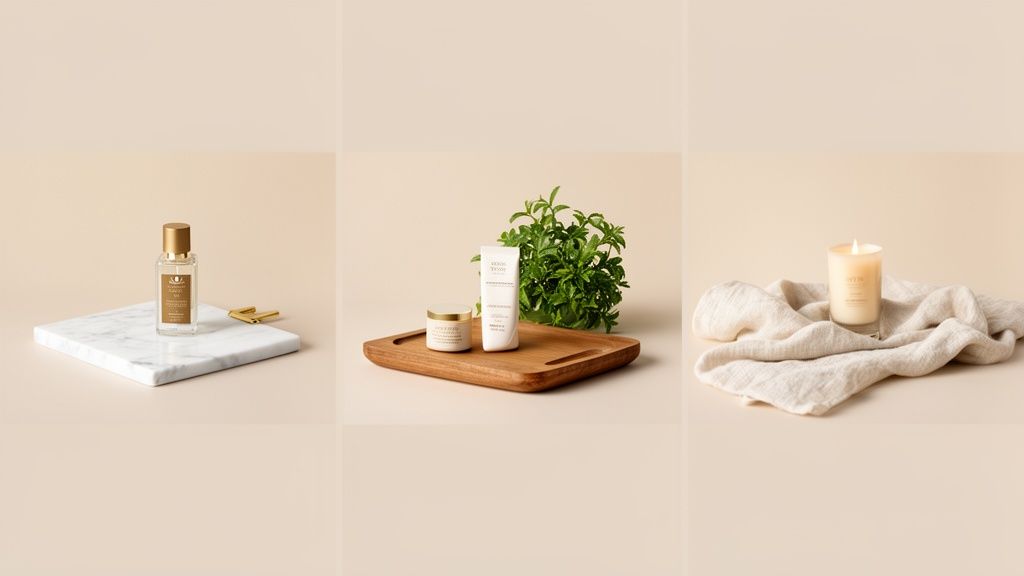
At the end of the day, product photography is a sales tool. A clean, white-background shot is great for showing what a product is, but a photo with thoughtful props shows a customer why they need it. That pivot from informative to persuasive is where you'll see a real impact on your bottom line.
Props are what inject context and emotion into an otherwise sterile image. Think about it: a bar of artisan soap by itself is just soap. But place that same bar next to a soft linen towel, a sprig of lavender, and a ceramic dish, and you've suddenly created a relaxing, spa-like experience. That's the power of telling a story with objects.
Building an Emotional Bridge with Your Customer
People don't just buy things; they buy the feelings, solutions, and experiences those things promise. Your job as a photographer is to make that promise feel real and within reach. By staging a miniature lifestyle scene, you help shoppers visualize the benefits before they even add to cart.
Here are a few scenarios I’ve seen work wonders:
- For a high-end watch: You could place it on a handsome leather-bound journal next to an elegant fountain pen. This instantly signals sophistication and professionalism.
- For organic skincare: Try surrounding the bottle with fresh botanicals, citrus slices, or a cool marble tray to convey natural ingredients and a touch of luxury.
- For a cozy blanket: Drape it over an armchair with a steaming mug and an open book. You’re not just selling a blanket; you’re selling an irresistible invitation to relax.
Each of these examples uses props to build an emotional connection, turning a static item into the star of a desirable lifestyle. It’s no secret that better visuals lead to more sales, which is why experts agree on how better product content improves conversion.
Key Takeaway: Your goal isn't just to decorate the frame. It's to build a miniature world where your product is the hero. This visual story is often more convincing than any product description you could ever write.
Matching Prop Types to Your Brand's Message
So, where do you start? The key is aligning your props with the specific message you want your brand to convey. I've put together a quick reference table to help you brainstorm which prop categories fit the story you're trying to tell.
Matching Prop Types to Your Brand's Message
| Prop Category | What It Conveys | Best For Products Like… |
|---|---|---|
| Natural Elements | Freshness, organic, eco-friendly, calm | Skincare, food, wellness items, home goods |
| Luxe Materials | Premium quality, luxury, elegance, value | Jewelry, high-end fashion, beauty products |
| Textiles & Fabrics | Comfort, softness, warmth, handcrafted | Home decor, apparel, baby products, bedding |
| Office & Tech | Productivity, professionalism, modern, sleek | Electronics, stationery, business accessories |
| Kitchen & Food | Homestyle, gourmet, fresh, delicious | Cookware, food items, kitchen gadgets |
Think of this table as a starting point. The real creativity comes when you mix and match these ideas to create a scene that feels authentic to your unique brand identity.
Choosing Props That Tell Your Product Story
Picking the right props is less about filling the frame and more about telling a story. Your goal is to find items that support your product, not steal the show. Every single prop should have a job, whether it's providing context, setting a mood, or simply helping a customer get the product on a deeper level.
I always think of props as the supporting cast in a movie. They’re there to make the star—your product—look even better. This all comes down to getting the fundamentals of visual harmony right: scale, color, and texture.
The Essentials of Scale, Color, and Texture
Nailing these three elements is everything. They're the invisible threads that hold a composition together and keep your product as the undeniable hero of the shot. If one of them is off, the whole image can feel clumsy and confusing.
-
Scale and Proportion: Props should never, ever dwarf your product. A tiny, delicate necklace, for instance, would be completely swallowed by a huge jewelry box. Instead, try placing it on a small, elegant ring dish. This keeps the visual hierarchy clear and the focus where it needs to be.
-
Color Harmony: Stick to a tight color palette that reflects your brand’s vibe. Props in neutral or complementary shades will make your product's colors sing. Imagine a vibrant red kitchen gadget—it will pop beautifully against a simple wooden cutting board and a muted linen tea towel.
-
Texture and Material: This is where you add that tangible, sensory feel. Texture creates depth and makes an image feel more real. Pairing a smooth, glossy ceramic mug with a rough, rustic wooden table or a soft, chunky-knit blanket creates a satisfying contrast that’s a feast for the eyes.
Getting this mix right is what separates an amateur photo from a professional one. And in e-commerce, that visual quality is a massive driver of sales. In fact, a whopping 67% of consumers say image quality is "very important" when they’re deciding what to buy. You can dig deeper into how product photography influences sales on grabon.com.
A Practical Checklist for Prop Selection
Before you commit to a setup, it pays to run through a quick mental checklist. Asking yourself these questions will force you to be more intentional, ensuring your props are not just pretty, but strategically on-brand. It’s a simple framework that helps me make smarter choices every time.
Your Prop-Picking Framework:
- Does this prop match my brand’s identity? If your brand is sleek and modern, a rustic, antique prop will just look jarring. Stay consistent.
- Does it clarify the product's function or scale? A smartphone placed next to a laptop instantly communicates its compact size. A dollop of face cream on a fingertip shows its texture better than words ever could.
- Is this prop adding to the story or just creating a distraction? A beautiful handmade mug next to a book and a steaming cup tells a story of a cozy morning. But that same mug on a busy, patterned placemat? That's just visual noise.
- Are the prop’s color and texture enhancing my product? The prop's job is to make your product look even more appealing, never less.
- Will this prop resonate with my target audience? Choose items that reflect the lifestyle and taste of the customers you’re trying to connect with.
Finding the Perfect Props for Your Product Niche
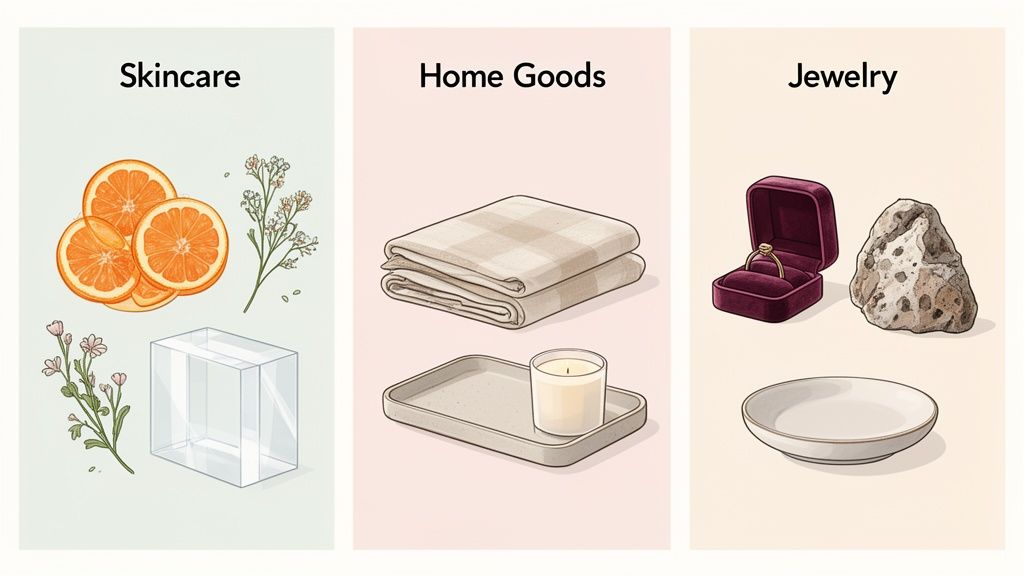
Sometimes the hardest part of a photoshoot is brainstorming ideas that don’t look like everything else on Instagram. The best props feel like a natural part of the scene, instantly telling your product’s story and highlighting its best features.
Let's move beyond the basics. Here are some niche-specific prop ideas to get your creative gears turning. Each one is designed to create a visual shortcut, connecting your product to feelings like freshness, luxury, or comfort that resonate with your customers.
Skincare and Beauty
With beauty products, you’re usually selling an outcome: freshness, natural purity, or a touch of clean luxury. Your props need to echo that vibe with textures and colors that feel both clean and inviting.
- Fresh Fruit & Botanicals: Nothing says "fresh ingredients" quite like sliced citrus next to a Vitamin C serum. A single monstera leaf or a sprig of lavender near a facial oil immediately hints at natural, calming properties.
- Acrylic Blocks & Water: Clear acrylic blocks lend a clean, modern, almost clinical feel to a shot, and they create gorgeous light refractions. For products focused on hydration, a few spritzes of water or some condensation beads can drive the point home beautifully.
- Luxe Fabrics: A small piece of silk or linen tucked under a perfume bottle or a jar of high-end cream adds an instant layer of elegance and softness.
- Lab Glassware: If your brand leans into the science of skincare, a clean beaker or a glass dropper can subtly reinforce that message of efficacy and precision.
These props help customers imagine the sensory experience—the zesty scent, the hydrating feel, the silky texture—long before they ever hold the product.
Home Goods and Decor
When you're selling home goods, you're not just selling an item; you're selling a lifestyle. Your props need to help you build a scene that feels stylish, cozy, and aspirational.
The goal is to create a "lived-in" vibe. You want a potential customer to see the photo and immediately think, "I want my home to feel like that." That emotional pull is what converts a casual browser into a buyer.
Context is everything here. Drape a chunky knit blanket over the armchair you're selling. Place a ceramic vase with a few stems of dried pampas grass on that new side table. These small touches build a complete, compelling story. If you need more inspiration, take a look at how professional stylists stage home decor product photos on prodshot.net to create truly irresistible scenes.
Jewelry and Accessories
Photographing jewelry is an exercise in restraint. You need to highlight incredibly fine details and convey a sense of value, so your props must be elegant and understated. The piece itself has to be the star.
- Textured Stones & Marble: A raw slab of slate, a smooth river stone, or a piece of polished marble can create a stunning, high-contrast backdrop that makes metals and gemstones pop.
- Velvet & Suede: The soft, matte texture of a velvet ring box or tray is perfect because it absorbs light. This reduces harsh glare and makes diamonds sparkle and gold look incredibly rich.
- Minimalist Ceramics: A simple, handcrafted ceramic dish or ring cone is a great way to display delicate earrings or rings. It adds an artistic, boutique feel to the shot.
- Shadow Play: This one is more of a technique than a prop, but it's powerful. Use a palm leaf or a piece of lace to cast soft, interesting shadows across your scene. It’s an easy way to add depth and a touch of creative flair.
Finding and Crafting Props on a Budget
You don't need a Hollywood-sized budget to create stunning product photos. In fact, some of the most impactful visuals I've ever shot were built on pure resourcefulness and creativity. Forget expensive prop houses; your next great find is probably hiding in a thrift store, at a local market, or maybe even in your own backyard.
The real trick is learning to look at everyday objects with a photographer's eye. That simple wooden cutting board in your kitchen? It could be the perfect warm, rustic base for a food product. A textured linen napkin or even a handful of acorns can add just the right touch of authenticity. Start thinking about what’s already around you and how it might help tell your product’s story.
Hunt for Hidden Gems
Thrift stores, flea markets, and even dollar stores are absolute gold mines for unique, affordable props. I've found incredible vintage books, interesting glassware, and all sorts of textured fabrics for just a few bucks. My advice? Look for pieces with neutral colors and simple designs—they’ll be the most versatile and won't pull focus from your product.
And don't overlook nature! It's one of the best free prop shops out there.
- Foraged botanicals: A few dried leaves, an interesting branch, some smooth stones, or a handful of wildflowers can bring an organic, earthy feel to your shot.
- Textured surfaces: I once used a weathered piece of wood I found on a walk as a beautiful, rustic backdrop for a whole jewelry collection.
This resourceful approach does more than just save money. It ensures your props are unique to your brand, which is a huge advantage in a crowded marketplace.
Embrace Your Inner DIY Expert
Why buy a prop when you can create the perfect one yourself? DIY props give you total control, allowing you to customize colors, textures, and sizes to perfectly match your brand's aesthetic. All it really takes is a quick trip to the craft store to get started on some game-changing projects.
For example, you can create a whole library of custom backdrops with a few cans of spray paint and some foam board. A little texturing and you can easily make it look like concrete, marble, or any solid color your brand needs. Repurposing is your best friend here—an old wooden crate can be painted and used as a riser, or a simple glass jar can hold fresh flowers to add life to a scene.
Pro Tip: Build a 'prop capsule' collection. Think of it as a small, curated set of versatile, on-brand items—like neutral fabrics, simple ceramics, and wooden trays—that you can mix, match, and reuse across dozens of photoshoots. It makes setup incredibly efficient and is super budget-friendly.
This cost-effective mindset is a massive advantage for online sellers. If you're running a store on Shopify or selling on Facebook Marketplace, smart propping saves you from renting expensive studios, especially when AI platforms can later transform your raw photos into polished gems. In the massive global e-commerce landscape, these tactics are the secret sauce for small retailers. Learn more about how product photography drives e-commerce success at colorexpertsbd.com.
The results really do speak for themselves. I once worked with an Etsy seller whose jewelry photos were just falling flat. We spent a single afternoon gathering props—a few textured tiles from a hardware store, some dried flowers from her garden, and a simple linen placemat. By thoughtfully incorporating these budget-friendly items, her product photos suddenly had a professional, cohesive look that led to a real, noticeable increase in clicks and sales. It's proof that great props are about creativity, not cash.
Arranging and Lighting Props for Stunning Photos
You’ve found the perfect props—that's a huge first step. But the real magic happens in how you arrange and light them. This is what separates a decent product shot from one that stops people in their tracks. Think of composition and lighting as your one-two punch for guiding the viewer's eye, setting a mood, and making your product the undeniable hero.
And no, you don't need a fancy studio to pull this off. A few foundational principles can completely transform your photos, and most of them don't cost a thing. Your frame is a stage, every prop has a part to play, and where you place it matters.
Mastering Composition and Staging
Composition is simply the art of arranging everything in your frame to create a pleasing, balanced image. It sounds technical, but it’s really intuitive once you get the hang of it.
One of the oldest tricks in the book is the rule of thirds. Picture your frame divided into a 3×3 grid. Instead of sticking your product right in the middle, try placing it along one of the lines or where two lines intersect. This simple shift instantly creates a more dynamic and professional-looking photo.
Another great technique is using leading lines. You can arrange props—a piece of flowing fabric, a sprig of greenery, even a carefully cast shadow—to create lines that guide the eye straight to your product. It’s a subtle way to tell your audience exactly where to look. Getting these details right is what makes for truly professional Shopify product photography that actually drives sales: https://prodshot.net/professional-shopify-product-photography.
Harnessing the Power of Light
Good lighting doesn't have to be complicated. In fact, the best light source you can find is probably streaming through your window right now.
Set up your scene near a window on a bright, slightly overcast day. This gives you beautiful, soft, and diffused natural light that wraps around your product and minimizes ugly, hard shadows. If the sun is a bit too strong, just tape a piece of white parchment paper or a thin white bedsheet over the window. Voila—instant diffuser.
You can also grab a cheap piece of white foam board from a craft store. Place it on the side of your product opposite the window to bounce light back into the shadows, brightening up the whole scene.
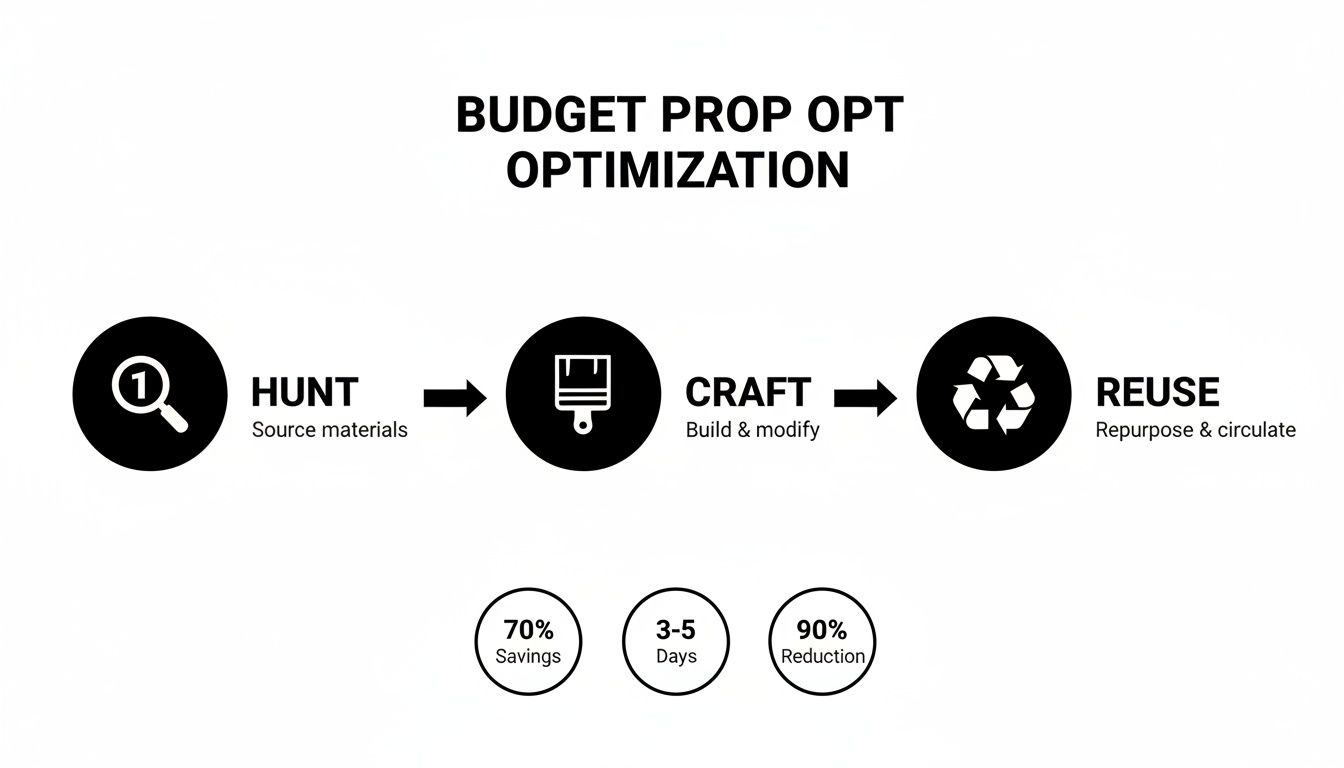
This workflow shows a smart cycle of finding, making, and reusing props, which is fantastic for both your budget and your creativity.
Pre-Shoot Staging Checklist
Before you even think about picking up the camera, do a quick final check. A few seconds here can save you hours of editing later.
- Scan for distractions. Look for dust, fingerprints, or anything in the background that pulls focus.
- Check your angles. Can you clearly see the product? Is it shown in its best light?
- Assess the balance. Does the scene feel lopsided or visually cluttered?
- Look at the shadows. Are they soft and adding depth, or are they harsh and distracting?
Getting the props and staging right is half the battle, but the technical side of the shot is just as important. For anyone shooting tricky items like accessories, exploring these top jewelry photography tips can be a real game-changer. A quick review before you shoot ensures every click of the shutter counts.
Using AI to Get Your Propped Photos Over the Finish Line
So, you've taken your beautifully styled shots. You’re almost there, but this final step—the editing—is what truly separates a good photo from one that makes customers click "add to cart." In the past, this meant sinking hours into complicated editing software. Now, AI can do the heavy lifting for you, transforming photos from your phone into images that look like they came straight from a professional studio.
Think about it. You stage the perfect shot, but then you notice it: a tiny scuff on your prop or an awkward shadow creeping in from the window. Instead of a frustrating reshoot or a painstaking manual edit, AI-powered tools can erase those distracting elements in seconds. With just a click or two, you can clean up imperfections and keep the focus right where it belongs: on your product.
But this technology does so much more than just basic touch-ups. It can intelligently brighten your scene, get the colors just right, and even create entirely new, photorealistic backgrounds that make your product and props look even better.
Effortless Edits and Instant Backgrounds
The ability to generate brand-new scenes without any technical fuss is a total game-changer. Let's say you shot your product on a plain wooden table, but later decide that a crisp marble background would better capture your brand's upscale vibe.
- Instant Backgrounds: AI can perfectly isolate your product and its props, then place them onto a new, hyper-realistic background that you choose.
- Smart Lighting Adjustments: The magic is that the AI doesn't just copy and paste. It intelligently adjusts shadows and reflections to match the new environment, making the final image look completely authentic.
This is an amazing way to squeeze more value out of a single photoshoot. That one killer shot can be repurposed for countless marketing campaigns or seasonal promotions just by swapping out the AI-generated background. If you want to see this in action, playing around with an AI product photo generator is the best way to understand how it can build different scenes around your core image.
This approach means you can create flawless, high-converting product photos without shelling out for expensive software or a professional retoucher. It really levels the playing field, letting small businesses produce visuals that can go toe-to-toe with major brands.
Ultimately, bringing AI into your post-production workflow is a massive time and money saver. It handles the tedious, repetitive parts of photo editing, which frees you up to focus on what you actually do best—creating and selling great products. The result? A polished, consistent, and professional-looking product gallery that builds trust and boosts sales.