
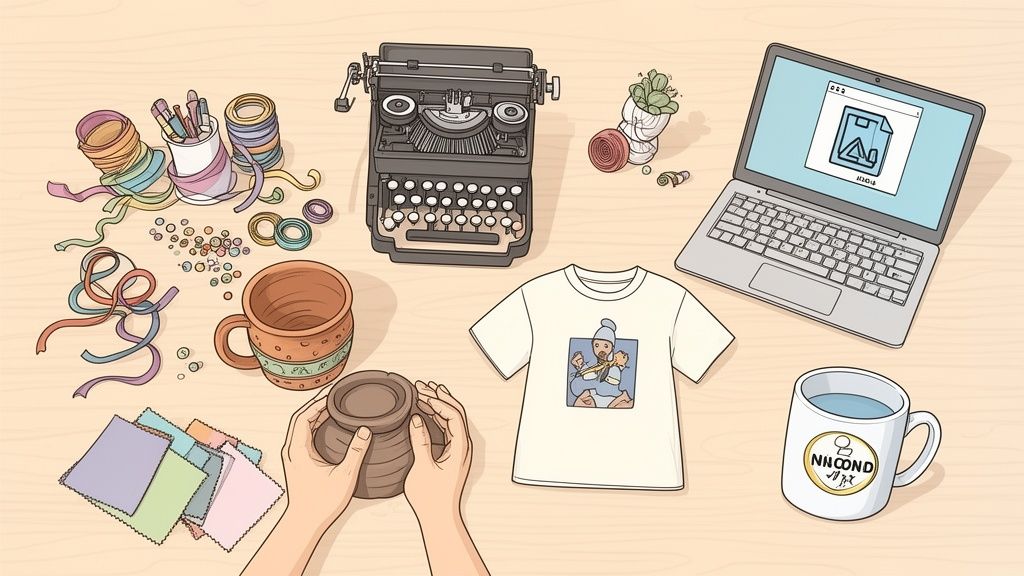
So, you're thinking about opening an Etsy shop? The first question on everyone's mind is usually, "What can I actually sell here?"
It's a great question because Etsy isn't like Amazon or eBay where anything goes. At its core, Etsy is a unique marketplace built on three specific pillars: Handmade Goods, Vintage Items, and Craft Supplies. Understanding these categories isn't just about following the rules—it's about finding your place in the community.
Breaking Down Etsy's Core Product Categories
Think of Etsy as a massive, bustling artisan market, not a big-box department store. Every virtual stall is occupied by a creator, a curator of cool old stuff, or someone supplying the tools for others to make their own magic.
Getting a firm grip on these three foundational categories is your first real step. It ensures your shop starts on the right foot and connects with the kind of shoppers who come to Etsy looking for something special.

To make it even clearer, let's quickly break down what fits where.
Etsy's Main Product Categories at a Glance
| Category | Core Rule | Example Products |
|---|---|---|
| Handmade Goods | You must have either made the item yourself or designed it. | Hand-painted mugs, custom-designed t-shirts, digital planners, knitted sweaters. |
| Vintage Items | The item must be at least 20 years old. | 1980s band t-shirts, antique furniture, mid-century glassware, old vinyl records. |
| Craft Supplies | Materials whose primary purpose is for use in creating an item. | Yarn, fabric, jewelry-making beads, scrapbooking paper, paint brushes. |
Now, let's dig a little deeper into what each of these really means for you as a seller.
The Handmade Pillar
This is the absolute heart and soul of Etsy. When you hear "Etsy," this is probably what you picture. An item is considered Handmade if you, the seller, either physically made it or you designed it from scratch.
This doesn't mean you have to be whittling every piece by hand in a rustic cabin (though you totally can!). The definition is flexible enough for modern creators.
- You're the maker: You're the one knitting the scarves, painting the portraits, or building that custom bookshelf. Your hands are directly involved in the creation.
- You're the designer: You dream up the brilliant ideas. Maybe you create awesome digital art for prints, design a unique enamel pin that a production partner manufactures, or build beautiful templates for other creators to use. The original concept is yours.
The Vintage Pillar
This category is for the treasure hunters and curators. If you have a great eye for things with a past, this is your playground. To qualify as Vintage on Etsy, an item must be at least 20 years old.
This rule is non-negotiable.
Key Takeaway: The 20-year rule is strict and what separates Etsy from a simple secondhand shop. Selling a cool t-shirt from 2010 won't fly here—that’s just used, not vintage. We're talking about things that have a real history, like retro clothing from the 90s, antique lockets, or classic comic books.
The Craft Supplies Pillar
This is the category that fuels all the creativity. Craft Supplies are the tools, ingredients, and raw materials that other Etsy sellers (and crafters everywhere) buy to create their own handmade goods. It's the "behind-the-scenes" of the handmade world.
Supplies can be either commercial (like a big bag of beads or a skein of yarn you bought wholesale) or handmade in their own right (like your own hand-dyed fabric or custom-made pottery tools).
Getting this right from the start is crucial. Applying some smart category management best practices not only keeps your shop in good standing but makes it way easier for the right buyers to find you. For instance, if you're diving into the home decor space, you'll need stunning visuals to compete—our guide on creating amazing home decor product photos can give you a huge leg up.
Alright, you've got the basics down—Handmade, Vintage, and Craft Supplies are the three pillars of Etsy. But the million-dollar question is, where do you actually find the gold? Just because you can list something doesn't mean it'll fly off the virtual shelves. Success on Etsy is all about finding that sweet spot where your passion meets a crowd of eager buyers.
Think of it like a treasure map. The main categories are the big continents, sure, but the real treasure is buried on the smaller, more specific islands. Those are your niches.

Evergreen Powerhouses on Etsy
Some categories are just always popular. They're the reliable workhorses of Etsy, consistently pulling in shoppers and making sales because they tap into things people always want and need. These are fantastic starting points for any new seller.
- Home & Living: This category is a beast. It covers everything from big-ticket items like custom furniture to small, impulse buys like unique plant pots and small-batch candles. Personalization is the name of the game here—think custom house portraits or engraved cutting boards.
- Jewelry & Accessories: Another giant. This niche is all about unique design and self-expression. You'll always find a market for things like minimalist gold jewelry, birthstone necklaces, and personalized bracelets.
- Craft Supplies: You can sell the "picks and shovels" to the other gold miners! DIY kits, like for embroidery or candle-making, are huge. So are unique yarns or specialty beads. You're selling to other makers, which is a fantastic, built-in audience.
- Weddings & Parties: This one is a no-brainer. There's always an event on the horizon. From custom invitations and cake toppers to personalized bridesmaid gifts and party favors, the possibilities are practically endless.
These evergreen niches have proven demand. Your job isn't to reinvent the wheel, but to find your own unique spin within one of them.
The Rise of Digital Downloads
One of the most exciting and fastest-growing corners of Etsy is the world of digital products. These are items that customers buy and download instantly. No shipping, no inventory, no packing tape. It's a model with incredible potential for passive income once you've put in the upfront design work.
Digital products solve an immediate need for the buyer. They're not just buying a file; they're buying a solution—whether that's an organized life, a beautiful social media feed, or a perfectly planned event.
Here's a look at what's thriving right now in the digital space:
- Printable Planners & Journals: Budget trackers, fitness planners, and daily organizers are always in demand.
- Social Media Templates: People are desperate for professionally designed, customizable graphics for platforms like Instagram and Pinterest.
- Digital Art Prints: High-resolution artwork that customers can print and frame themselves is an easy way to sell art globally.
- Ebook & Workbook Templates: These are perfect for coaches, creators, and other small business owners.
And this isn't just a hunch; the numbers back it up. In the fourth quarter of 2025 alone, Etsy's marketplace pulled in a jaw-dropping $3.3 billion in Gross Merchandise Sales. Key categories like Home & Living, Craft Supplies, and Paper & Party Supplies (which is packed with digital items) all saw year-over-year growth. As you can read in this breakdown of Etsy’s marketplace growth on EcommerceBytes, this shows just how strong and sustained buyer interest is. Focusing on these high-growth areas can seriously stack the odds in your favor.
Alright, so you've got a fantastic idea for your Etsy shop. That's the exciting part. But before you dive in, we need to talk about something less thrilling but absolutely crucial for your shop's survival: knowing what you can't sell.
Etsy has a Prohibited Items Policy for a reason—it keeps the marketplace safe and protects everyone involved. Ignoring these rules, even by accident, is a fast track to getting your listings pulled or, worse, your account shut down for good.
Think of it like driving. Some things are a hard "red light"—absolutely forbidden, no exceptions. Others are more of a "yellow light," where you can move forward, but you better be paying close attention and following some very specific rules.
Red Light Items: The Absolute No-Gos
Let's start with the easy ones. These are the items that are completely off-limits. Etsy is all about handmade, vintage, and craft supplies, and these things just don't fit that mission. They're either illegal, dangerous, or way outside the spirit of the platform.
Here’s a quick rundown of the big ones:
- Alcohol, Tobacco, and Drugs: This is a wide net that catches everything from wine and beer to drug paraphernalia and medical drugs.
- Hazardous Materials: Pretty self-explanatory. This means things like explosives, flammable liquids, gases, and poisons.
- Weapons and Items Promoting Violence: Firearms and certain knives (your kitchen knives are fine!) are banned. Anything that glorifies violence or hatred is also a major no-go.
These categories are black and white. Don't even think about trying to find a loophole here. It's the quickest way to end your Etsy journey before it even begins.
Etsy’s whole goal is to be a safe, trusted place to shop. Their Prohibited Items Policy isn't just a list of arbitrary rules; it’s the foundation that keeps the community safe and transactions legitimate.
Yellow Light Items: Proceed with Extreme Caution
This is where things get a bit more gray. "Yellow light" items aren't completely banned, but they are heavily regulated. Selling them means you have to be incredibly diligent and follow Etsy's policies to the letter.
A good example is animal products and human remains. It's a sensitive area, for sure. You might be able to sell ethically sourced leather or bone from an animal that isn't endangered, but selling anything from a protected species is a huge violation.
Likewise, some items fall into regulated categories, like event tickets or certain Native American crafts, which have their own set of highly detailed rules. You absolutely must follow them.
Navigating these yellow-light areas means you have to do your homework. Seriously. If you have any doubt about an item, go straight to the source and read the specific policy page for it. When in doubt, it’s always smarter to skip listing the item than to gamble with your shop's future on the platform.
Sure, the handmade goods you craft are the soul of Etsy, but your creative business doesn't have to stop there. You can actually scale your shop, broaden your product line, and even build some passive income streams—all while sticking to Etsy’s handmade policy.
Let's talk about two powerful ways to do this: digital products and production partners.
Think of digital products as your "create once, sell forever" assets. You put in the design work upfront, and then you can sell that same file over and over again. No inventory, no shipping, no hassle. It’s a brilliant answer to the question of what to sell on Etsy beyond physical items.
For instance, a graphic designer could sell a pack of social media templates. A calligrapher? Printable wedding invitations. An artist could offer high-resolution digital prints that customers download and print themselves.
The Power of Digital Downloads
The market for digital goods is massive. People are constantly looking for instant solutions, whether it’s a tool to get their life organized or something beautiful for their online space. This is the perfect lane for sellers who want to ditch the endless cycle of packing boxes and running to the post office.
Some of the most popular digital products out there include:
- Planners and Trackers: Think budget planners, fitness journals, and daily organizers. People love these.
- Templates for Creatives: This could be anything from media kits and social media graphics to full-blown ebook templates.
- Printable Art and Decor: This gives customers instant access to awesome wall art they can print on their own dime.
Using Production Partners The Right Way
So, what if you've designed an amazing t-shirt or a beautiful mug but don't own the expensive equipment to actually make it? That's where production partners come in. Etsy lets you team up with outside manufacturers, like print-on-demand (POD) companies, to help bring your original designs to life.
Now, this is a really important distinction. You’re not just reselling someone else's mass-produced stuff. You are the designer, the creator of the original concept. The partner is just the hands that help produce it. This model opens up a huge range of products—apparel, tote bags, phone cases, home goods—without you needing to sink thousands into equipment.
The Golden Rule: You absolutely must disclose your production partners in your listings. Etsy is all about transparency. You have to clearly state who is helping you make your goods so shoppers know the real story behind their purchase.
To use a production partner and stay compliant with Etsy's handmade policy, you just need to follow three simple but non-negotiable rules:
- You Must Be the Designer: Every single item has to start with your original design, artwork, or composition.
- Be Transparent About Partners: You need to name the company helping you physically produce your items and list their location.
- You Are Responsible: At the end of the day, you're still on the hook for the quality of the final product and the entire customer experience, from the moment they click "buy" to when the package arrives.
By strategically using digital products and production partners, you can seriously grow your shop's potential. You'll reach more customers and build your brand, all while staying true to the creative spirit that makes Etsy what it is.
How to Validate Your Product Idea Before You Launch
Having a brilliant product idea is a fantastic start, but it's only half the battle. Before you pour your heart, time, and money into creating something, you need to make sure real people are actually looking to buy it on Etsy. This is where you put on your detective hat and use the platform itself to dig up some crucial intel.
The best place to begin your investigation is the most obvious one: the Etsy search bar. Start typing in keywords related to what you want to sell. Watch the autocomplete suggestions that appear as you type—this is Etsy handing you a golden list of what shoppers are searching for, using their own words.
Become an Etsy Market Detective
Once you hit search, it's time to dive deep into the listings that show up on the first page. Don't just skim through them. Your job is to analyze what the top sellers are doing right, almost like reverse-engineering their success. This isn't about copying anyone; it's about spotting the winning formula in your niche.
As you look at your competitors' listings, ask yourself a few key questions:
- Photos: What kinds of images are they using? Are they crisp, clean studio shots? Lifestyle photos showing the product in action? Detailed close-ups of the texture? Remember, high-quality images are table stakes on Etsy.
- Pricing: What's the going rate for items like yours? Be honest about how your product's quality, materials, and uniqueness measure up.
- Descriptions: How do they talk about their products? Pay attention to the keywords they sprinkle in, the benefits they highlight, and the overall voice and tone of their writing.
This process will help you uncover patterns and, more importantly, find gaps in the market. Maybe everyone is using the same sterile white background for their photos; this is your chance to stand out with a warmer, more inviting style. Perhaps no one offers a particular color or a personalization option. That could be your unique edge.
Calculate Your Profitability
Market validation isn't just about customer demand; it's also about whether the numbers actually work. A super popular product that costs you more to make than you earn is just an expensive hobby, not a business. You have to calculate your potential profit margin before you go all in.
Key Insight: To build a real business, your idea must be more than just creative—it has to be commercially viable. The only way to know for sure is to account for every single cost, from the tiniest bead to the shipping label.
Start by making a list of every expense tied to making one single unit of your product. Be meticulous.
- Material Costs: The price of all your raw materials, like fabric, paint, or wood.
- Etsy Fees: Don't forget to factor in the listing fee, transaction fee, and payment processing fee.
- Shipping Costs: This includes your boxes, bubble mailers, tape, and the actual cost of postage.
Subtract these total costs from your ideal selling price. The number you're left with is your profit. If that margin looks razor-thin, you might need to rethink your pricing or hunt for more affordable suppliers before you launch. It's also smart to understand the cost of professional product photography, as great visuals are a key investment that directly boosts sales.
This flowchart can help you map out the journey from your initial idea to a scalable shop, whether you're making items by hand or working with outside partners.

As the chart shows, whether you’re a hands-on maker or a designer overseeing production, there are clear paths to bring both physical and digital products to market successfully.
Creating Product Photos That Turn Browsers into Buyers
On a platform like Etsy that’s all about visuals, your product photos are everything. They aren't just there to look pretty; they are your single most important sales tool.
Think of them as your digital storefront window. They have to be good enough to stop someone dead in their tracks while they're scrolling and make them want to come inside for a closer look.

Here's the good news: you don't need a fancy, expensive studio. A smartphone and some good natural light are often all you need to create pictures that actually sell.
Focus on the basics. Get shots from multiple angles, include something that shows the product's scale, and use lifestyle photos to tell a story. A lifestyle photo simply shows your product in a real-world setting, helping shoppers see how it could fit into their own lives.
Giving Your Photos a Professional Edge with AI
For sellers who want to look like a pro without the professional price tag, modern tools have completely changed the game. Imagine snapping a quick photo on your phone and having an AI assistant instantly turn it into a studio-quality shot. This kind of tech makes polished, high-converting images available to literally everyone.
Tools like ProdShot let you upload a simple, raw photo and get back perfectly lit images with clean, professional backgrounds. This is how you build a cohesive and trustworthy brand look across your entire shop, which is so important for making buyers feel confident. You can see how this works by checking out our solutions for professional Etsy product photography.
This is especially true if you're in a crowded niche like jewelry. Etsy's own data shows just how big mobile shopping has become—the Etsy app was responsible for 46% of Gross Merchandise Sales in a recent quarter. On a tiny screen, a thumb-stopping visual is what separates a quick scroll from a sale. AI-optimized images give you that exact advantage. You can dig into the full 2025 results from Etsy's investor relations for more details.
The goal is to make your product look so irresistible that clicking "add to cart" feels like the most natural next step. Your photos should answer questions before they're asked, create desire, and prove you're a seller they can trust.
A Few Lingering Questions About Selling on Etsy
Even with the best game plan, it's totally normal to have a few questions buzzing around in your head before you take the plunge. Getting those sorted out is often the last step you need to feel confident enough to hit "publish" on your shop.
Let's clear up some of the most common things new creators ask.
Can I Resell Items I Didn't Make Myself?
For the most part, that’s a no. The heart and soul of Etsy is its focus on items that are either handmade by you (or you’re the designer), vintage (at least 20 years old), or craft supplies for other makers.
While you can use a production partner if you’re the one who created the original design, simply buying modern, mass-produced stuff and flipping it on Etsy goes against their core policies. It's what keeps the marketplace unique.
Do I Need a Business License to Sell on Etsy?
Etsy itself won't ask you for a business license when you're setting up your shop. But—and this is a big but—you're still on the hook for following all the laws in your city, state, and country.
This could mean you need to register your business name, get a license, or handle sales tax. Your best bet is always to have a quick chat with a local legal or tax professional. It's a small step that can save you major headaches down the road.
What Actually Sells Best on Etsy?
Trends come and go, but a few categories are always buzzing with activity. These are the perennial favorites that consistently pull in buyers:
- Handmade Jewelry: People are always looking for unique, personalized pieces they can't find anywhere else.
- Unique Home Decor: Think custom art, small-batch candles, and personalized decor that makes a house feel like a home.
- Craft Supplies: The DIY movement is huge. Selling unique materials and kits to other creators is a massive market.
- Personalized Gifts: Anything for a wedding, birthday, or holiday is a guaranteed winner. This is a huge reason people come to Etsy.
- Digital Downloads: Planners, templates, and printable art are fantastic because you create them once and can sell them over and over. A great source of passive income!
And when you're thinking about shipping those physical goods, don't forget the practical stuff. You'll need to source reliable packaging like sturdy cardboard boxes to make sure your beautiful creations arrive in one piece.
Ultimately, the real secret is finding a specific niche and showcasing your products with amazing, professional-looking photos.
Ready to create those stunning, high-quality photos? ProdShot turns your simple phone pictures into professional, conversion-optimized images in seconds. Try it for free and see how easy it is to make your products stand out: https://prodshot.net