
Introduction
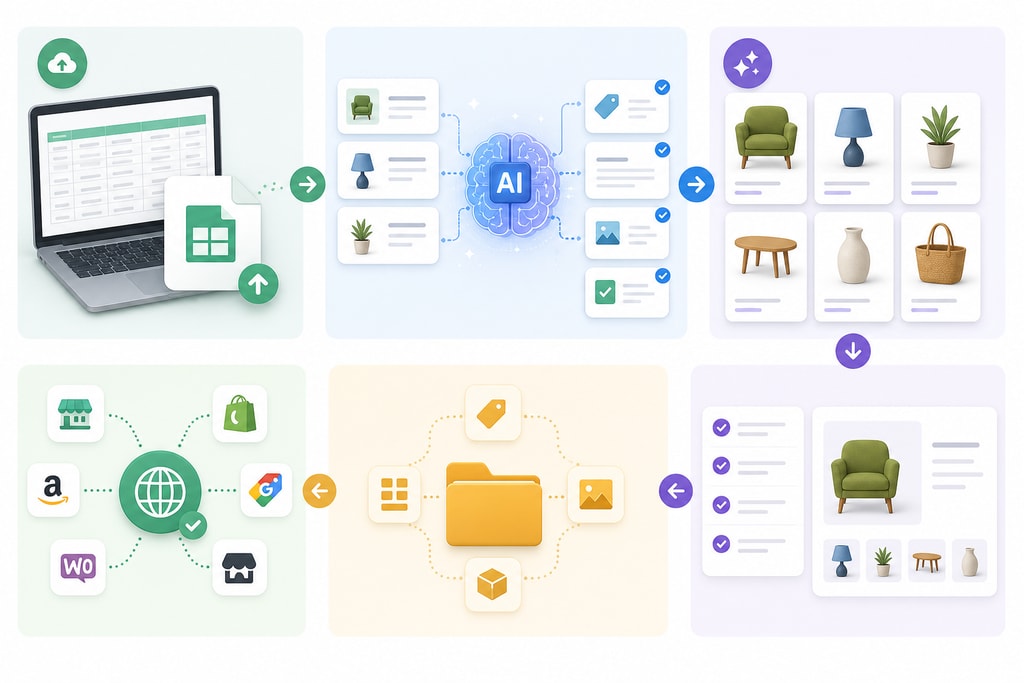
In today's fast-paced e-commerce landscape, maintaining an up-to-date product catalog is not just crucial—it's imperative. Traditional manual updates can lead to inefficiencies and inconsistencies that impact customer experience and sales. Enter AI-powered batch processing: a revolutionary approach that allows businesses to update entire catalogs swiftly while preserving uniformity across product listings.
The Drawbacks of Manual Catalog Management
Time-Consuming Processes
Manually editing each product listing is labor-intensive, demanding hours that could be spent on strategic growth.
Inconsistencies in Product Information
Variations in product descriptions, images, and formats can occur, resulting in a disjointed brand experience that confuses or alienates customers.
Resource Diversion
Employing staff to manage these tasks can strain resources and detract focus from other core business operations. This often leads to delayed updates and potential losses in revenue.
Unlocking the Benefits of AI-Powered Batch Processing
Enhanced Efficiency
AI batch processing allows hundreds or even thousands of product updates simultaneously, reducing the time required from weeks to mere minutes.
Consistent Branding
Ensuring product descriptions, images, and formats are uniform boosts brand identity, reinforces customer trust, and improves conversion rates.
Scalability
Effortlessly manage extensive product inventories, adapting to growth without the traditional scaling of labor or time commitment.
Techniques for Streamlining Product Catalog Updates
1. Automated Image Enhancement
High-quality visuals are essential in capturing attention and driving conversions. AI tools can standardize image quality, adjusting for lighting and clearing backgrounds across batches. Technologies like PicToPose exemplify this, applying consistent styling en masse.
2. AI-Generated Product Descriptions
Crafting compelling, SEO-friendly descriptions becomes seamless with AI. Platforms like Catalog Mind generate these from product images or CSV data, optimized for marketplaces like Shopify and Amazon.
Consider utilizing internal resources like Create Product Photos for a seamless visual-creation process integrated with AI solutions.
3. Bulk Product Uploads
Tools such as Batchify simplify managing large inventories, allowing for efficient upload and categorization on platforms like Printify, handling placements, variants, and metadata in one smooth process.
4. AI-Powered Catalog Enrichment
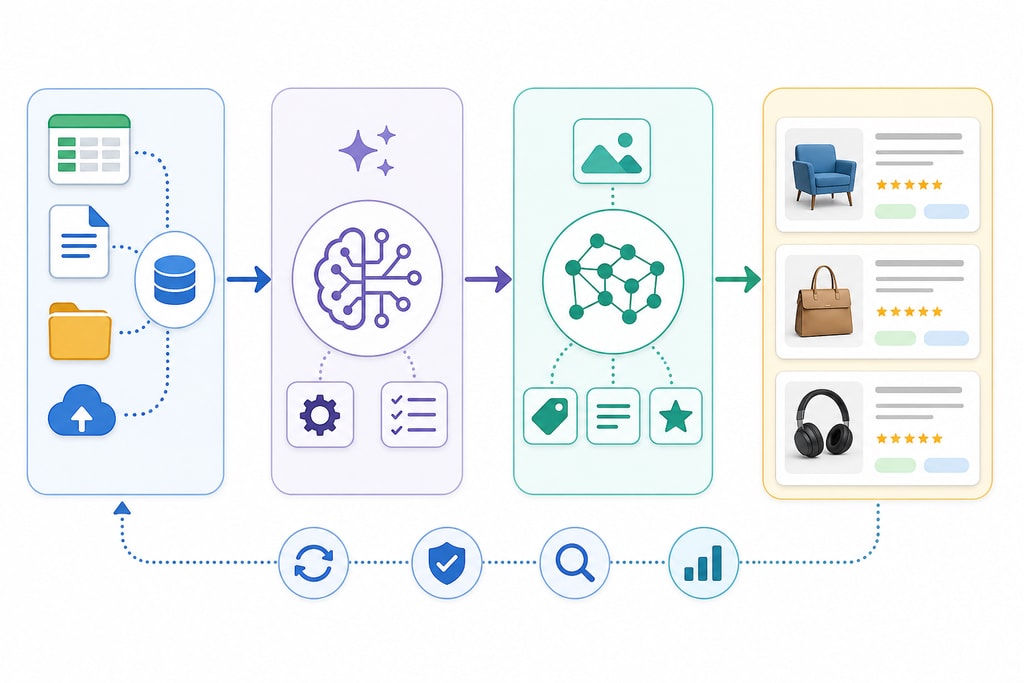
Enhance product data by sourcing and verifying information automatically. Systems like Attrimatic reduce manual research, accelerating the publication of well-documented, structured catalog entries.
Steps to Implement AI Batch Processing
- Evaluate Current Systems: Identify bottlenecks in your current manual processes where AI could yield the most efficiency.
- Select the Right Tools: Ensure chosen AI solutions are compatible with existing platforms and align with business needs.
- Pilot Testing: Begin with a subset of products to assess AI effectiveness in maintaining quality standards.
- Training Staff: Equip your team with the skills and understanding necessary to leverage these technologies effectively.
Explore our Batch Catalog Refresh Calculator to project potential time savings and ROI.
Real-World Applications and Decision Criteria
Practical Examples
- Fashion Retailers: Automating image editing for product lines each season.
- Tech Companies: Consistently updating specifications with each new release.
Consider company goals, technological infrastructure, and specific catalog needs to choose the appropriate AI solutions.
Common Mistakes to Avoid
- Ignoring Human Oversight: AI tools are powerful but require human validation to catch nuances and ensure quality.
- Neglecting Integration Needs: Ensure that AI tools can comfortably integrate into existing processes without creating silos.
Frequently Asked Questions (FAQs)
Q: Is AI batch processing suitable for small e-commerce operations?
A: Absolutely. AI batch processing levels the playing field, enabling small businesses to save time, maintain consistency, and effectively compete with larger enterprises.
Q: What safeguards are in place to ensure the accuracy of AI-generated information?
A: Most AI tools utilize extensive databases and validation algorithms that ensure data accuracy before integration.
Q: Can content generated by AI be tailored to maintain brand voice?
A: Yes. Many AI platforms include customization features, allowing content to be adjusted to reflect a brand's unique style and tone.
Conclusion
Embracing AI in your product catalog management process can dramatically boost efficiency and brand coherence. Engage with solutions such as ProdShot to enhance your product imagery while integrating AI-driven processes for comprehensive success. This strategic shift allows you to focus on growth-oriented initiatives, ensuring your product listings remain accurate, engaging, and aligned with your brand’s ethos.