

Introduction
In the competitive realm of e-commerce, high-quality product images are not just an option—they're essential. Images greatly influence customer engagement and conversion rates, making them a cornerstone of online selling. However, obtaining professional product photos has traditionally been seen as costly and time-consuming. The rise of artificial intelligence (AI) has shifted this landscape, offering affordable and efficient alternatives to traditional methods. This guide delves deep into the cost-effectiveness, quality, and strategic implications of AI versus traditional product photography, enabling e-commerce sellers to make well-informed decisions.
Traditional Product Photography: Costs and Considerations
Breakdown of Traditional Photography Expenses
Traditional photography can be an expensive affair, with costs generally encompassing:
- Photographer Fees: Professional photographers' rates can vary, generally ranging from $1,000 to $2,000 daily, depending on their experience and location.
- Studio Rental: Renting studio space may cost between $500 and $1,500 per half-day session.
- Props and Styling: Additional props and styling can add $200 to $500 per session to the costs.
- Post-Production Editing: Editing services typically cost $15 to $50 per image.
For example, photographing a small catalog of 50 products might cost between $2,500 and $7,500, with turnaround times spanning 1 to 3 weeks. High-volume or complex projects can further escalate these figures.
Time and Resource Investment
The expenses extend beyond financial outlays; time investment is significant. Scheduling, coordinating with photographers, setting up shoots, and managing post-production delays can impact business timelines, slowing product listings and sales.
AI Product Photography: A Cost-Effective Alternative
Understanding AI Product Photography
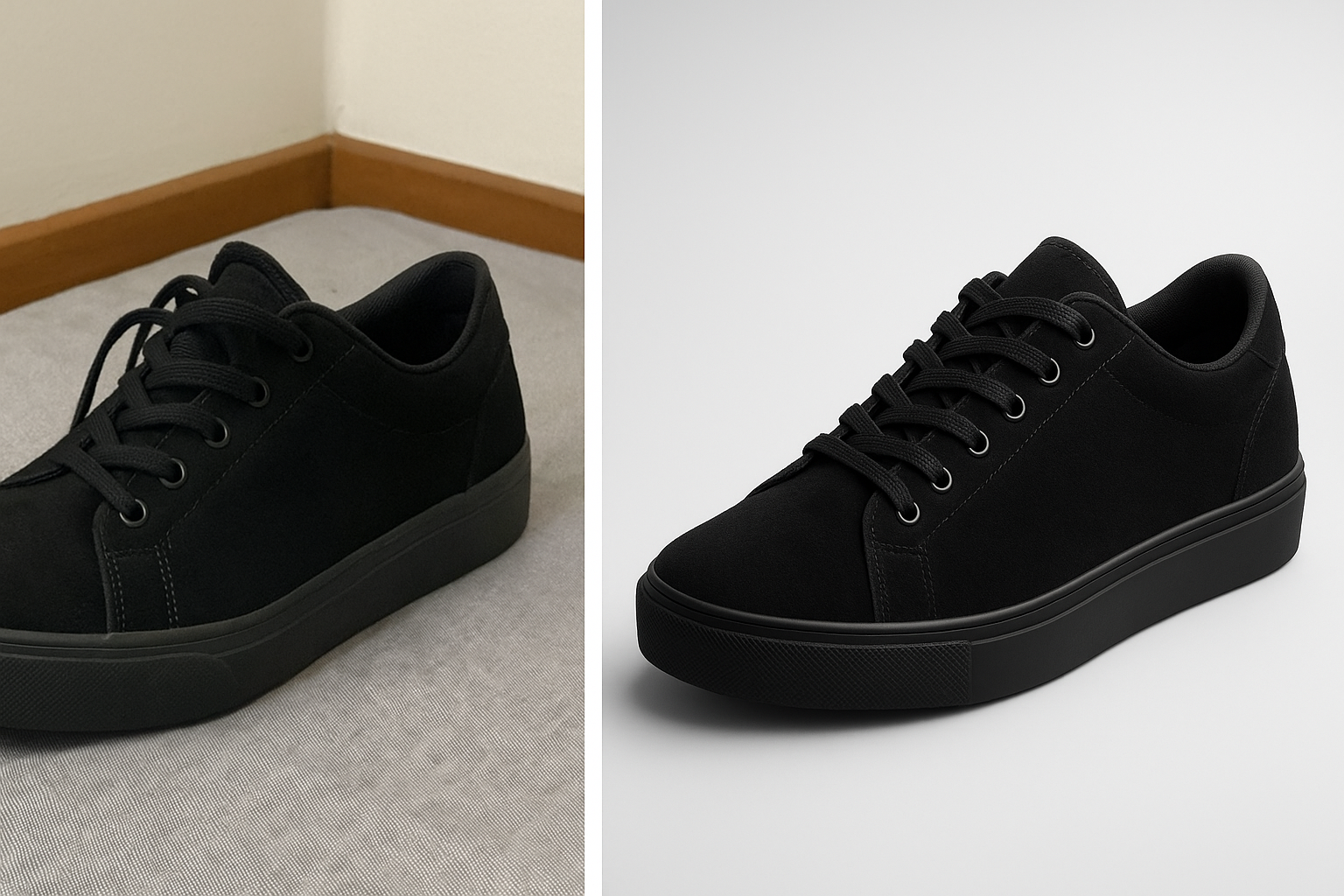
AI product photography leverages advanced algorithms, transforming basic product photos into professional-grade images. Sellers upload casual pics, often snapped with smartphones, which AI tools enhance to meet professional e-commerce standards.
Cost Structure of AI Photography
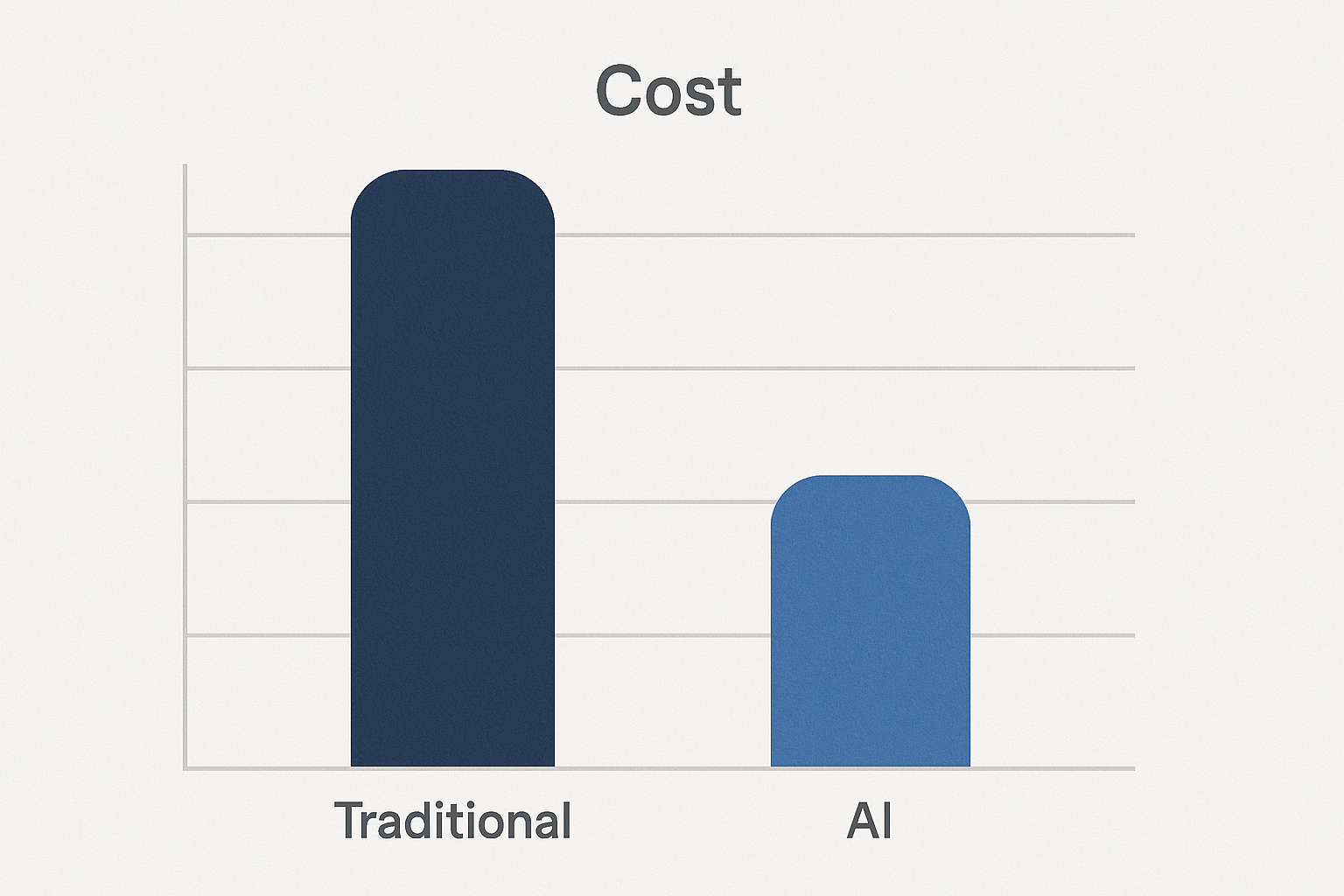
AI photography platforms often offer various pricing models:
- Per-Image Pricing: Costs range from $0.02 to $0.50 per image based on platform features.
- Subscription Plans: Monthly packages range from $49 to $499, offering set numbers of images or even unlimited access.
- API Access: High-volume needs can be accommodated with API pricing, starting at $0.03 to $0.08 per image, often with volume discounts.
For processing 500 images with AI, sellers can expect costs from $100 to $750—a small fraction compared to traditional expenses.
Time Efficiency and Scalability
The efficiency of AI-generated images is notable, typically delivered within minutes, vastly reducing time to market. This enables sellers to quickly update their listings, staying responsive to market changes. Additionally, AI handles large volumes effortlessly, a logistical challenge for traditional methods.
Quality Comparison: AI vs. Traditional Photography
Image Quality and Consistency
Modern AI tools have hit quality parity with traditional photography for most standard products. AI offers consistent branding across listings with uniform lighting, backgrounds, and styling. However, traditional methods might still be favored for items requiring fine detail capture, like jewelry or complex textures.
Limitations of AI Photography
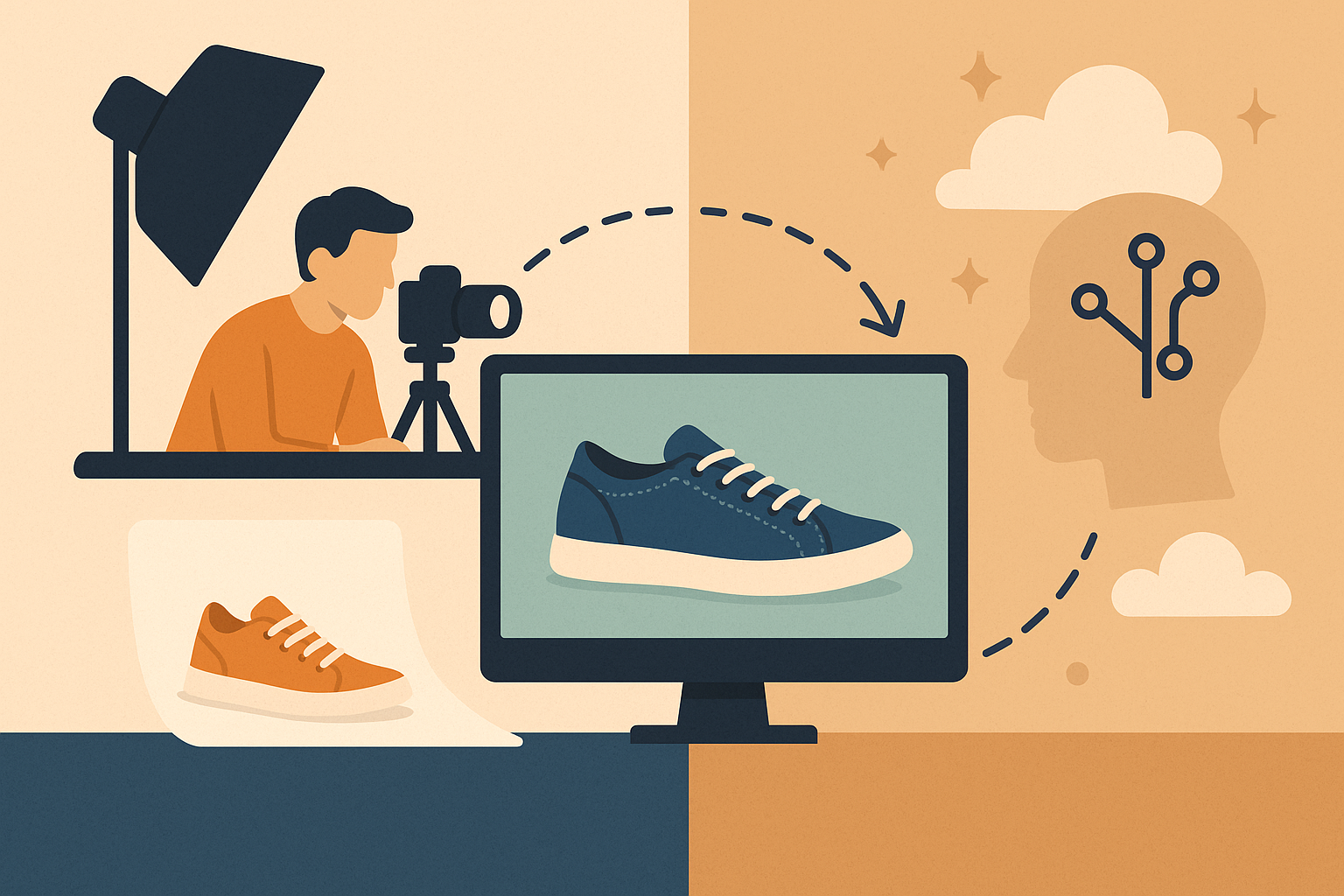
While impressive, AI photography has limitations:
- Complex Products: Complex textures or reflective surfaces may not be accurately captured.
- Brand-Specific Requirements: Custom branding and unique artistic directions might be hard to replicate with AI.
A hybrid approach, balancing AI for standard images and traditional methods for specific needs, can be advantageous.
Cost-Benefit Analysis for Different Business Sizes
Small E-Commerce Sellers
For small businesses managing 10 to 30 SKUs, traditional photography may cost $750 to $4,500. AI alternatives can accomplish similar tasks for $5 to $45, dramatically slashing costs and freeing resources for other growth initiatives.
Growing Brands
Mid-sized businesses needing 400 to 800 images annually face traditional photography costs between $30,000 and $120,000. AI offers the same service for just $200 to $1,200, thus liberating substantial marketing and product development budgets.
Large Enterprises
Enterprises with vast SKUs maximize AI's scalability. Traditional in-house studios could demand over $200,000 annually, whereas AI delivers equivalent outcomes for $1,800 to $6,000, enabling strategic fund allocation.
Practical Decision Criteria
Evaluate Your Product Photography Needs
To determine the appropriate approach, assess:
- Product Complexity: Do your products require intricate detail capture?
- Volume of Products: Estimate the regular quantity of SKUs requiring photography.
- Budget Constraints: Establish your product photography budget.
- Time Sensitivity: Determine how quickly you need images for listings.
- Brand Requirements: Evaluate any custom branding elements for inclusion.
Common Mistakes and How to Avoid Them
- Ignoring Quality Parity: Many assume traditional photos always trump AI; however, technology now often matches quality standards for most products.
- Overlooking Branding Needs: Not considering special branding elements can lead to inconsistent imagery.
- Missing Hybrid Opportunities: Failing to combine AI and traditional methods when appropriate may miss optimal solutions.
Marketplace-Specific Advice
- Amazon: Ensure adherence to Amazon's specific image requirements, including size and format. AI tools can efficiently provide compliant images.
- Etsy: Focus on style and aesthetics, which AI can help achieve through customizable features.
FAQ: Common Questions About AI Product Photography
Q: Can AI-generated images meet marketplace requirements?
A: Yes, AI tools are equipped to produce images that align with platforms like Amazon and Etsy.
Q: Is AI suitable for all product types?
A: While highly effective for most products, AI may struggle with items needing intricate detailing.
Q: How can I transition to AI product photography?
A: Start by choosing a suitable AI platform, uploading your images, then customizing outputs. Consider using the Product photo cost calculator to manage expenses.
Conclusion
AI product photography stands as a cost-effective, efficient, and scalable solution for e-commerce sellers in pursuit of high-quality visuals. While traditional methods remain viable for highly complex needs, AI provides a competitive advantage in most scenarios. By methodically evaluating your business requirements, embracing AI or a hybrid strategy can substantially refine your e-commerce photography strategy.
For sellers ready to explore AI solutions, ProdShot offers a straightforward platform to convert existing photos into professional-quality images, streamlining online sales success.
Sources and Further Reading
- AI Product Photography Cost 2026: $0.05/Image vs $150 Traditional | SellHound
- AI Product Photography Cost in 2026: What Brands Actually Pay | 51st & Eighth
For further insights or detailed cost analysis, visit Product photo cost calculator.